
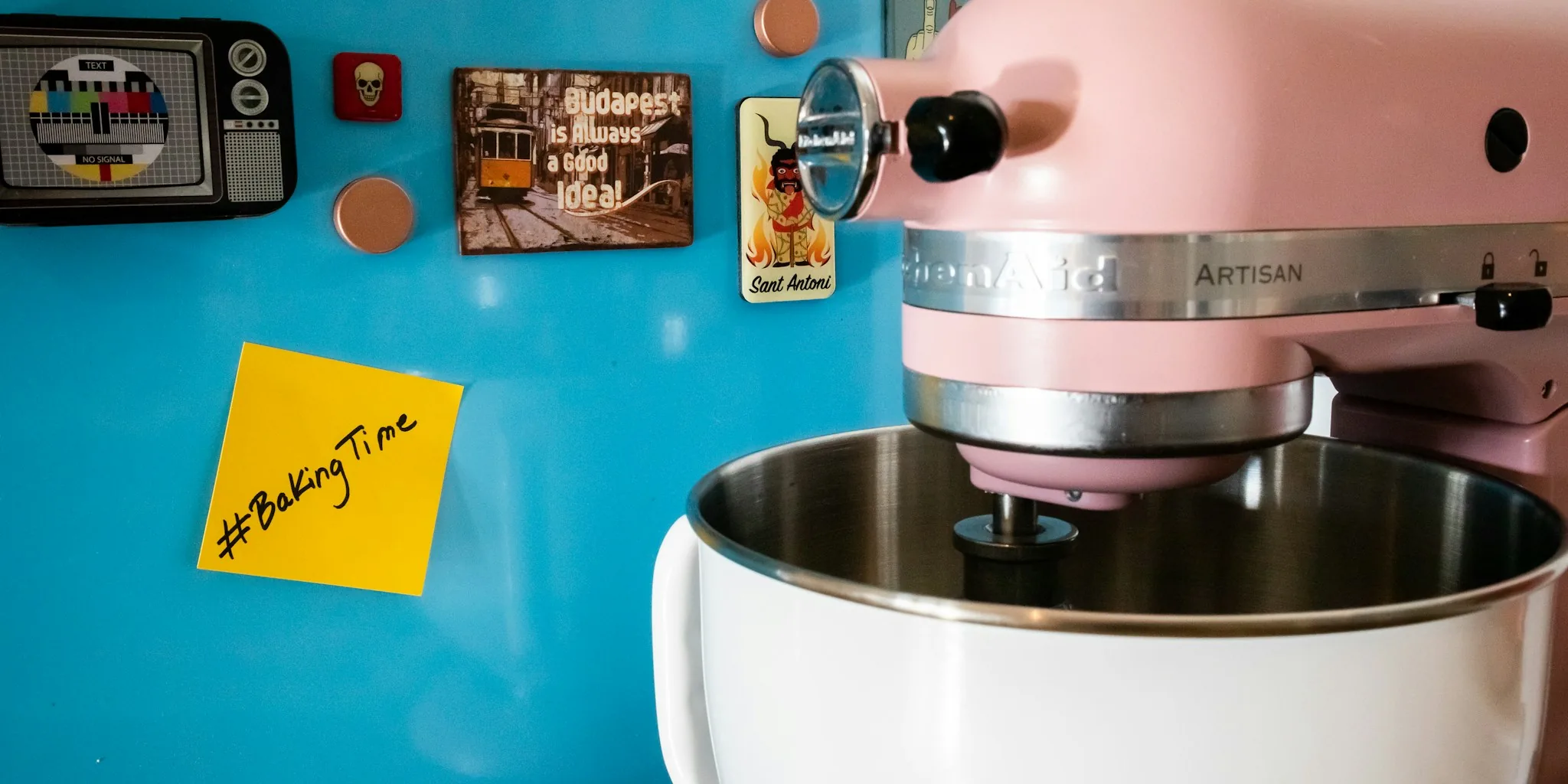

Major kitchen appliance testing labs have released updated findings on stand mixers, revealing which models deliver the best performance across different baking tasks and budgets. The research tested six distinct machines through rigorous evaluation including bread kneading, whipped cream preparation, cookie dough mixing, and cake baking. Here’s what shoppers need to know before making a purchase.
The Top Performers Across Different Categories
Testing identified a clear winner for overall performance: the KitchenAid Artisan Plus, priced around $600. This model represents the first major update to KitchenAid’s iconic design since 1955, featuring increased power at 350 watts compared to 250 watts in the previous version. The unit includes an integrated bowl light and eleven preset speeds, including a new half-speed setting that prevents flour clouds when you start mixing. Testers found it excelled at producing dense cookie doughs and fluffy whipped cream, though the head lock can occasionally come loose when working with stiff doughs.
For budget-conscious buyers, the Cuisinart SM-50TQ stands out at roughly $320. This model offers twelve speed settings and performed impressively during testing for whipping egg whites and cream. At just 23 pounds, it’s lighter and more convenient for storage than heavier alternatives. The machine accepts optional attachments for pasta rolling, spiralizing, and ice cream making, adding versatility without requiring a completely new appliance.
The Hamilton Beach Electric emerged as the best option for newcomers to stand mixers. Priced under $160, this lightweight machine weighs just over 9 pounds and includes a large handle for easy transport. Seven speed settings provide adequate control, and the unit features counter suction to prevent movement during operation. Despite some minor splattering during tests, it received high marks for kneading and whipping performance. Understanding the core capabilities of stand mixers helps match machines to your baking style.
Specialized Models for Dedicated Bakers

Those serious about bread and pizza making should consider the Ooni Halo Pro Spiral Mixer at $799. This machine uses a rotating bowl paired with a spiral hook rather than traditional planetary mixing. The extra-large 7-quart capacity handles up to 11 pounds of yeast dough, making it ideal for sourdough and pizza enthusiasts. Testers noted that dough kneaded evenly without sticking, and bread baked in this mixer achieved higher rise with better crumb structure than competitors. The removable breaker bar attachment allows dough adjustment without stopping the machine. However, the larger footprint and potential difficulty with small batches are trade-offs to consider.
The Ankarsrum Original Stand Mixer, also $799, impressed testers with its Swedish engineering and massive 7.4-quart stainless steel capacity. Unlike traditional tilt-head designs, the motor sits in the base, allowing you to add ingredients to an open bowl without maneuvering around a moving head. The machine handled dense cookie doughs smoothly and whipped cream remarkably fast. Some components require hand washing rather than dishwasher cleaning, and setup has a learning curve, but serious bakers praised its stability and power. Manufacturing quality directly affects long-term reliability and performance in demanding baking scenarios.
Smart Technology Meets Kitchen Mixing

The GE 7-Quart Smart Mixer with Auto Sense, currently discounted to $599 from $799, brings connected technology to stand mixing. This model includes built-in scales to weigh ingredients, voice command capability for hands-free control, and an app that allows remote speed adjustments and timer management. The Auto Sense technology monitors mixing progress and stops automatically when butter reaches the right consistency. The 7-quart bowl accommodates various batch sizes, and eleven speed settings include a slow start function. The main drawback is weight: at 35 pounds, it requires two people to move and isn’t practical for storage. The scale also measures in 5-gram increments, making it less precise than dedicated kitchen scales.
Key Considerations Before Buying
Understanding stand mixer types matters when choosing. Most common are tilt-head models where the head tilts back for bowl access, and bowl-lift models with a fixed head and movable bowl arms. Spiral mixers and rotating-bowl designs offer different advantages for specific tasks. Capacity ranges from 4 to 7.4 quarts, power ranges from 300 to 650 watts, and prices span $150 to $800. Consider how frequently you bake, what you typically make, available counter space, and storage capacity when making your decision.
Testing shows that heavier mixers aren’t automatically superior. While extra weight can stabilize machines working with dense doughs, it makes storage and movement inconvenient. Your actual baking needs should drive this decision rather than specifications alone. Standard attachments like flat beaters, dough hooks, and whisks come with all models, but expandability through optional accessories varies significantly between brands.






Write Your Review
No reviews yet. Be the first to share your experience!