


The compact SUV market is heating up, and two of this year’s most compelling turbocharged options are redefining what it means to blend family practicality with driving fun. The 2026 Volkswagen Tiguan and 2026 Mazda CX-50 have emerged as top contenders in a segment where automakers are increasingly adding turbocharged power to otherwise traditional family haulers. For shoppers evaluating these two vehicles, understanding their strengths and trade-offs is essential.
Pricing and Feature Overview
Both vehicles come in various trim levels, with our focus on the higher-end models tested: the Tiguan SEL R-Line at approximately 46,170 dollars and the Mazda CX-50 Premium Plus at approximately 45,210 dollars. The Mazda offers a slight price advantage while delivering an impressive feature set including surround-view cameras, auto-dimming mirrors, and automatic rear braking. The Volkswagen counters with premium touches like massaging front seats, an aggressive sportier exterior design, and a more spacious cargo area. When configured with popular options, the pricing between these two becomes quite competitive.
Interior Space and Design Quality
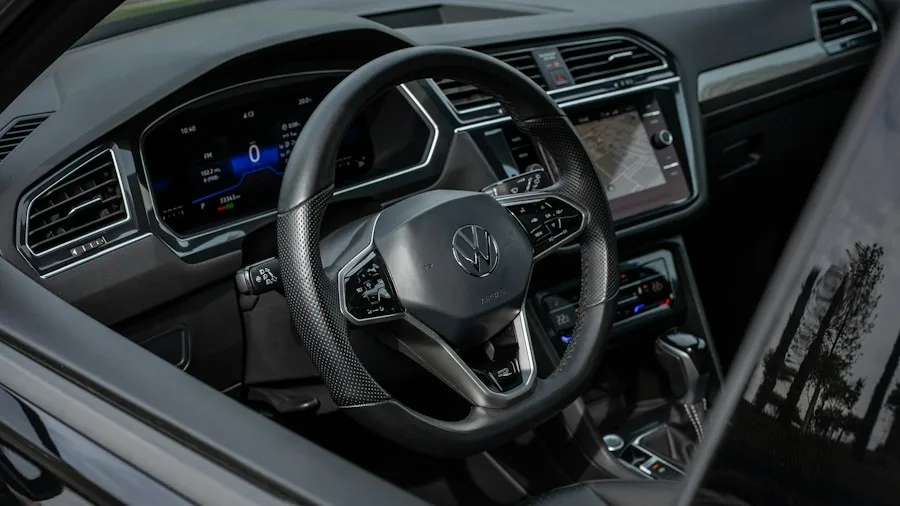
Both interiors aim for luxury, but they take different approaches. The CX-50 emphasizes traditional controls with abundant physical buttons and switches, though its infotainment screen feels dated compared to newer competitors. The Tiguan features a more modern dual-screen setup and a wood trim accent that elevates the cabin aesthetic to near-premium brand levels. For rear passengers, the CX-50 offers more front legroom, while the Tiguan provides noticeably more rear legroom and superior cargo capacity whether seats are folded or upright.
One curious detail worth noting: the Mazda’s heated steering wheel only warms specific grip areas, leaving other sections cold. The Volkswagen’s heated wheel warms the entire circumference, a thoughtful detail that impacts daily usability. As you shop for a new SUV with modern conveniences, these small details often influence real-world satisfaction more than headline specs.
Performance and Engine Characteristics
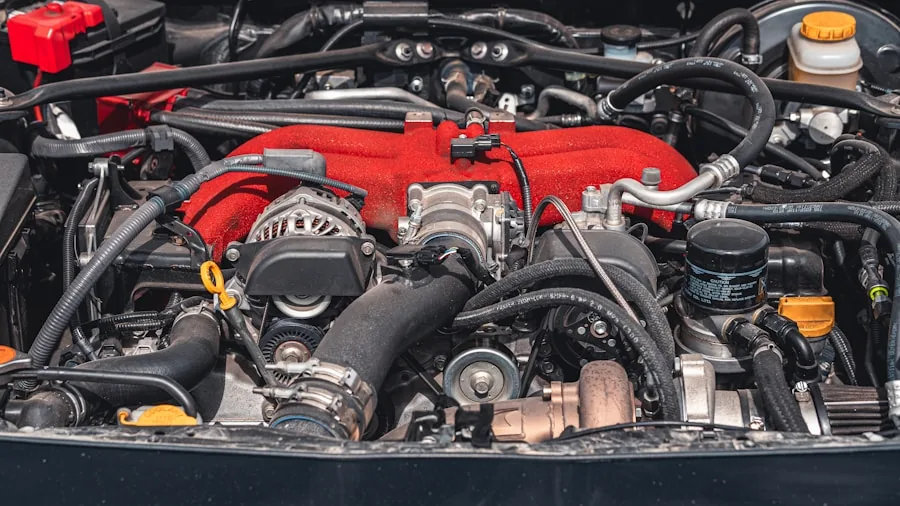
Under the hood, different engineering philosophies emerge. The Mazda uses a larger 2.5-liter turbocharged engine producing 256 horsepower and an impressive 320 pound-feet of torque, paired with a six-speed automatic. The Tiguan’s smaller 2.0-liter turbo generates 268 horsepower and 258 pound-feet of torque but couples with a more modern eight-speed transmission. The Mazda weighs about 160 pounds less, which provides a slight performance edge. In testing, the CX-50 reached 60 mph in 6.4 seconds compared to the Tiguan’s 6.6 seconds, and the Mazda required only 167 feet to brake from 70 mph versus the VW’s 176 feet. The Mazda also demonstrated superior cornering grip at 0.84 g against the Tiguan’s 0.78 g. Mid-range acceleration between 50 and 70 mph favored the Tiguan, though both vehicles feel appropriately quick for family duty.
Fuel Economy and Real-World Efficiency
EPA estimates are virtually identical, with both vehicles earning 25 mpg combined and 29 mpg highway ratings. The Mazda claims 23 mpg city while the Tiguan achieves 22 mpg. However, real-world highway fuel economy testing at 75 mph revealed a surprising twist: the Tiguan delivered 31 mpg while the Mazda managed 28 mpg, suggesting the Volkswagen’s eight-speed transmission provides meaningful efficiency advantages on sustained highway driving despite the Mazda’s lighter curb weight.
Driving Dynamics and Comfort
Both vehicles reward spirited driving, though each excels in different areas. The CX-50 delivers superior ride quality with better bump damping that feels more luxurious during daily commutes, especially on rough road surfaces. The Tiguan carries more traditional German firmness in its suspension tuning, which some drivers appreciate for composed handling and others find overly stiff. The Mazda features superior brake pedal feel and throttle response, while the Tiguan offers weightier, more communicative steering. Sound levels are comparable at highway speeds, though the CX-50 runs slightly quieter during city driving. If you’re considering a new turbocharged SUV with refined dynamics, these differences become noticeable during longer drives.
Which SUV Wins?
The 2026 Volkswagen Tiguan edges ahead in this comparison, particularly because it now offers improved interior design quality while maintaining superior space and efficiency advantages over the Mazda. The Tiguan represents a significant generational improvement in both aesthetics and functionality. The Mazda CX-50 remains an excellent choice if cabin quietness, responsive handling, and ride comfort take priority over cargo capacity and highway efficiency. As the compact SUV market evolves with new entrants, these two vehicles establish a strong baseline for what modern turbocharged family vehicles can deliver in terms of performance, features, and driving engagement.




Write Your Review
No reviews yet. Be the first to share your experience!