
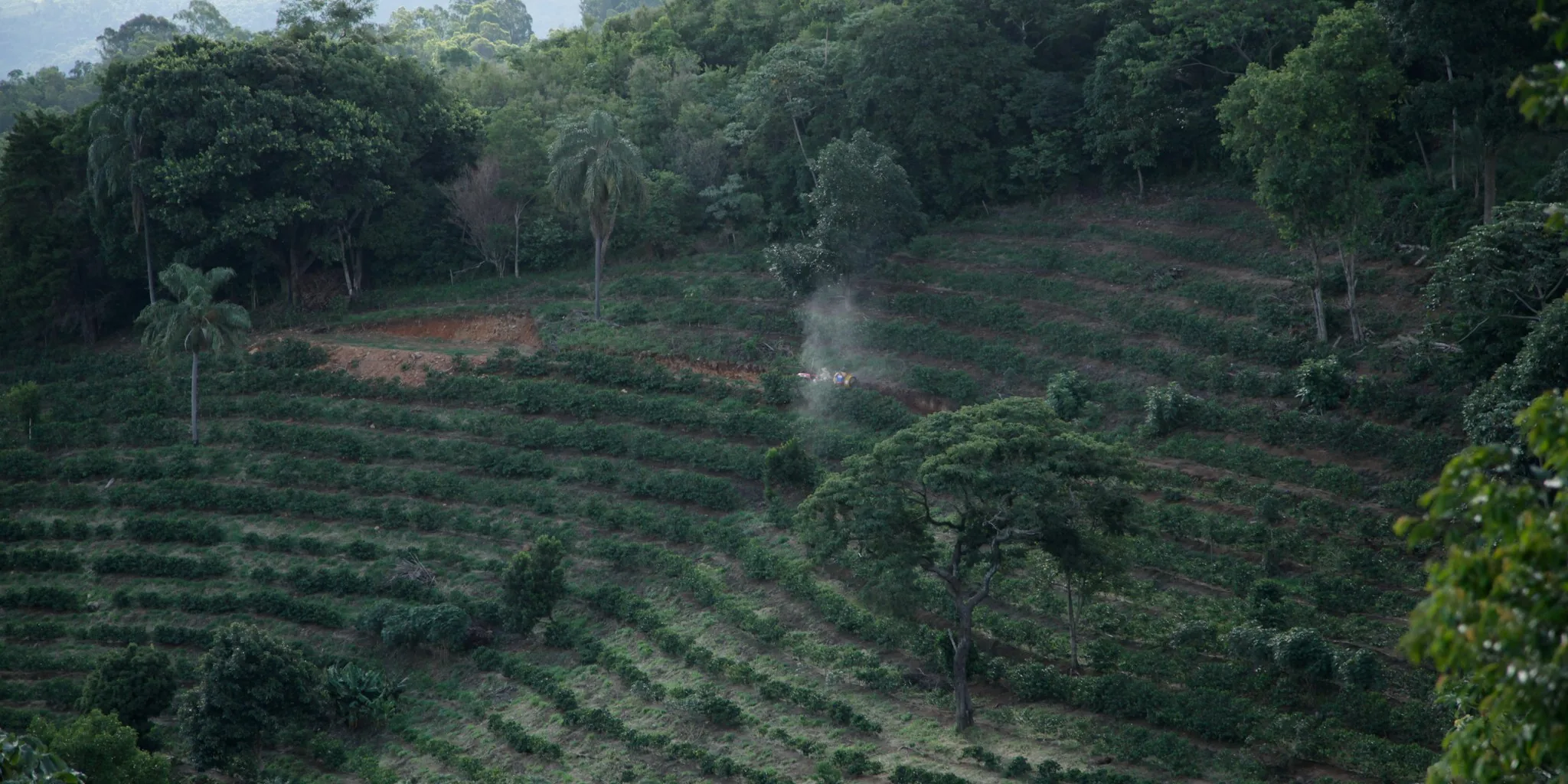

A sweeping new European Union regulation is reshaping the global coffee market in ways that will soon affect American shoppers. The European Union Deforestation Regulation, or EUDR, establishes strict environmental standards that coffee exporters must meet to access European markets. But because major coffee-producing nations like Brazil and Colombia also export heavily to the United States, the ripple effects of these rules will reach consumers worldwide.
What the EUDR Actually Requires
The EUDR represents a fundamental shift in how environmental rules work. Rather than directly controlling how farmers grow coffee, the regulation conditions market access on a producer’s ability to prove where coffee was grown, how the supply chain was tracked, and whether farms meet environmental standards. This means coffee exporters can no longer compete primarily on price and quality alone. They now must demonstrate transparency and environmental compliance at every step from farm to container.
For coffee producers and exporters, meeting these requirements goes far beyond adopting new farming techniques. Success depends on establishing systems that document crop origins, verify sustainable practices, and prove compliance throughout the entire supply chain. This infrastructure must integrate data from farms, exporters, cooperatives and government agencies into a unified framework that satisfies European auditors.
How Brazil and Colombia Are Adapting Differently
Brazil and Colombia, the world’s top two coffee exporters, both face identical regulatory pressure from Europe. Yet recent research reveals they are taking notably different paths to adapt. These divergent strategies reveal an important truth: the ability to comply depends heavily on institutional support, not just producer willingness or technical capacity.
Colombia has concentrated coordination efforts through the Federación Nacional de Cafeteros, or FNC, a single organization with deep trust among producers and decades of experience managing the sector. This centralized approach has allowed Colombia to move quickly. The country has strengthened its Coffee Information System, expanded farm GPS mapping, and deployed technical advisors to help producers understand and meet new requirements.
Brazil operates through a more fragmented system involving multiple cooperatives, exporters, trade associations, and government bodies. This decentralized structure has sparked numerous initiatives, including collective traceability platforms and sector-wide coordination efforts. The diversity creates room for experimentation and local flexibility, but it also complicates information sharing and raises costs for integrating compliance across different actors.
Why Institutions Matter More Than You Might Think
The comparison between these two nations highlights a counterintuitive finding: compliance with global environmental rules depends less on a country’s production capacity or export volume than on the quality of institutions supporting implementation. Three institutional strengths proved critical.
Legitimacy builds trust among producers, encouraging them to invest time and resources in compliance. Centrality streamlines information coordination and keeps compliance costs manageable. Diversity accommodation ensures that small farms, mid-size operations, and large exporters can all participate, even if they have different technical capabilities.
Neither centralized nor decentralized systems have inherent advantages. Centralized arrangements can standardize rules quickly and reduce duplication of effort, but they risk excluding smaller actors or ignoring local conditions. Decentralized systems encourage tailored solutions and local innovation, but they demand stronger integration mechanisms to prevent fragmentation and cost escalation. When you’re shopping for the best coffee makers for every budget and brewing style, the coffee inside that bag reflects years of institutional coordination you’ll never see.
What This Means for American Coffee Shoppers
For you as a consumer, the EUDR’s impact will unfold gradually. Initially, you may notice increased pricing on premium European-roasted coffees and specialty imports as compliance systems mature and costs stabilize. Over time, certified sustainable coffee should become easier to identify and verify through transparent labeling.
The regulation also pushes smaller and mid-size producers to join collective compliance systems rather than attempting individual certification. This consolidation could actually benefit consumers by making quality specialty coffees more accessible, since shared traceability infrastructure lowers per-unit compliance costs. However, without adequate institutional support in producing countries, smaller producers could be priced out entirely, reducing variety and increasing prices for quality coffee.
The real question now is whether producing countries build the institutional capacity to make compliance work for all producers, not just large exporters. Strong institutions, shared data systems, and technical support are not optional extras; they are the foundation that determines whether global environmental rules succeed. Without them, compliance becomes another barrier that only wealthy producers can afford, and consumers lose access to good coffee from smaller farms. When you pick up your favorite coffee mug at the store, you’re holding the result of institutional decisions made an ocean away.






Write Your Review
No reviews yet. Be the first to share your experience!