


When shopping for a Bluetooth speaker, you might think a higher wattage rating automatically means louder sound and better performance. But that assumption could lead you astray. Recent guidance on speaker specifications reveals that wattage alone is a misleading way to evaluate or compare speakers, and understanding the truth behind power ratings can save you money and help you make a smarter purchase decision.
Why Wattage Doesn’t Tell the Whole Story
Manufacturers and retailers frequently list power ratings as the main selling point for portable speakers, but this metric is far more complicated than it appears. The fundamental issue is that speakers use two different methods to measure power: RMS and peak power ratings. Peak power represents the maximum electrical power an amplifier can handle for brief moments, while RMS reflects the sustained power a speaker can manage during continuous, real-world use.
Here’s where consumers often get confused: a speaker might display a peak power rating of 40 watts while only handling 20 watts of RMS power during normal operation. Retailers and manufacturers frequently advertise only the higher peak figure, making the speaker look more impressive on paper. This gap between the two measurements means you cannot rely on the power rating printed on a box to determine actual performance or loudness.
The Loudness Misconception
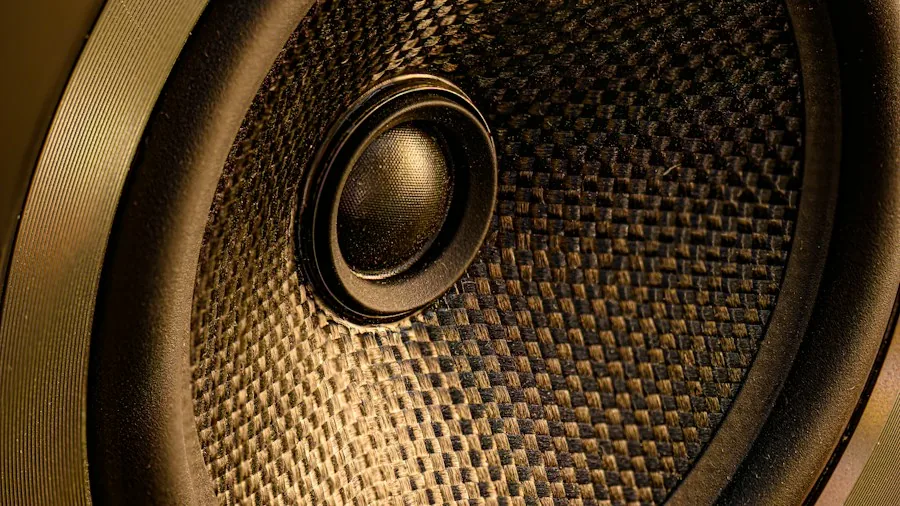
Perhaps the biggest myth about speaker power is that doubling the wattage doubles the volume. This is simply not how sound physics work. Increasing power from 10 watts to 20 watts raises the sound output by only about 3 decibels. Your ears, however, perceive a sound as roughly twice as loud when the volume increases by 10 decibels. This means you would need to increase power tenfold to actually double the perceived loudness. The difference between a 25-watt and 35-watt speaker is far less dramatic than consumers assume.
What Actually Matters More
Rather than obsessing over wattage numbers, focus on the speaker drivers and their sensitivity. An efficient 10-watt speaker can easily outperform a less efficient 20-watt model. When evaluating options, check reviews of the best Bluetooth speakers for every budget to see real-world performance data that goes beyond manufacturer specifications. Independent testing reveals how a speaker actually sounds and performs in practical situations, which is far more useful than comparing wattage alone.
Choosing the Right Power Rating for Your Needs

The ideal wattage depends entirely on your intended use. Compact portable speakers typically range from 3 to 10 watts of RMS power. These units work well if you sit close to them, but they may struggle to overcome background noise or fill larger rooms. For most indoor listening, speakers rated below 50 watts of RMS power provide sufficient volume without distortion.
If you want a speaker that can handle outdoor environments or larger spaces, consider models in the 40 to 100-watt range. These units often include dual drivers for clearer sound and maintain clean audio even at moderate volume levels. At the high end, speakers with 80 to 200 watts of RMS power are designed for large outdoor venues and parties, though they sacrifice portability and require more robust internal components.
Shopping Smart Beyond the Specs
When comparing Bluetooth speakers, treat wattage as a starting point rather than the final word. explore options across different speaker categories and room sizes to understand the range of what’s available. Note that even speakers within the same power range can sound dramatically different and deliver varying volume levels. Physical size can be misleading too, as a large battery might inflate a speaker’s dimensions without increasing actual performance.
Look for RMS ratings rather than peak power figures when available. If manufacturers don’t publish RMS data, read independent reviews that include measured sound output and real-world testing. Many retailers fail to distinguish between RMS and peak ratings on their product pages, so checking the manufacturer’s official specifications directly is often necessary.
Understanding these distinctions empowers you to make a purchase based on actual performance potential rather than misleading marketing numbers. Whether you need a speaker for intimate indoor listening or outdoor gatherings, matching the right wattage range to your use case is far more important than chasing the highest number on the box. By focusing on efficiency, driver quality, and real-world reviews alongside power ratings, you’ll find a speaker that truly meets your audio needs.






Write Your Review
No reviews yet. Be the first to share your experience!