


If you’re training for a half marathon or marathon, understanding how to train at race pace is critical to crossing the finish line with your goal time intact. But many runners struggle with a fundamental question: how much time should they actually spend running at race pace during their workout routine?
The answer isn’t as simple as “run every workout at race pace.” Professional coaches and experienced runners emphasize that training at race pace is essential, yet overdoing it can lead to fatigue, injury, and burnout. The key is finding the right balance through what fitness experts call “appropriate dosing.”
Why Race Pace Practice Matters Physiologically
Training at your goal race pace produces measurable physiological benefits. When you run at race pace consistently, your body adapts in specific ways. Your muscles learn to use carbohydrates more efficiently, and your aerobic system improves its ability to clear lactate even as intensity increases. Your neural pathways adapt as well, which directly improves your overall running economy and endurance.
Beyond the physical changes, running at race pace also has psychological value. It builds confidence and helps you understand whether your goal pace is realistic. If you’re three weeks away from race day and can’t hold your target pace without feeling completely exhausted, that’s valuable feedback that your goal time may need adjustment. Investing in proper workout shoes designed for distance running can help you train more comfortably and reduce injury risk during these critical pace-focused sessions.
Minimum Training Time at Race Pace

Here’s where training science diverges from intuition. Experts recommend measuring race pace training by time spent at intensity, not by distance covered. This distinction matters because two runners with different speeds can cover the same distance in very different time periods. A three-mile tempo run at race pace might be sufficient stimulus for one runner but far too short for another.
For half marathon training, coaches recommend accumulating at least 30 minutes at race pace during your peak workout, but not exceeding 60 minutes. This peak session typically occurs around three weeks before your race. For marathon training, the recommendation increases to a minimum of 45 minutes, with a maximum ceiling of 80 to 90 minutes to allow adequate recovery time.
These time minimums provide genuine physiological stimulus without creating excessive mechanical stress on your joints and connective tissues. Running too long at race pace can compromise your form as fatigue sets in, which significantly increases injury risk.
How Often Should You Train at Race Pace
The frequency of race pace work depends on your training timeline. When you’re eight to twelve weeks away from race day, experienced runners can incorporate race pace work into approximately one run every other week. This frequency helps raise your aerobic ceiling and maintains workout variety.
Once you’re within six to eight weeks of your race, increase race pace work to once per week. This is not something you start at full volume immediately; instead, you build progressively. Early in your training block, practice race pace in smaller increments: perhaps 4 repeats of 5 minutes with recovery jogs, then 5 repeats of 6 minutes, progressing to 3 repeats of 10 minutes before attempting a continuous 30-minute block.
First-time half marathoners and marathoners may not need this level of race pace specificity; simply completing the distance becomes the primary goal. For returning racers with time goals, however, race pace practice becomes increasingly important.
Practical Race Pace Workouts
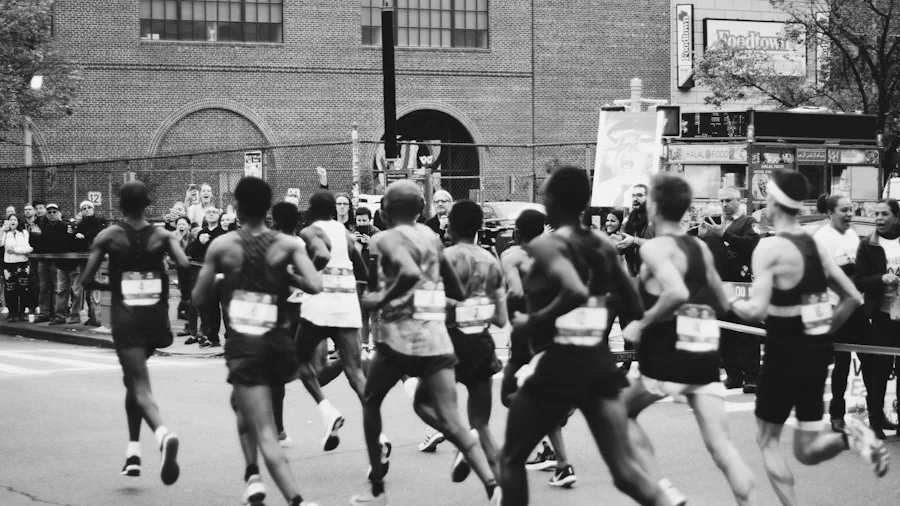
Two-mile repeats are highly effective for half marathon preparation. Start with 2 repeats of 2 miles at race pace and progress to 3 repeats, then 4 repeats for more advanced runners. These structured repeats teach your body pacing consistency and mentally prepare you for maintaining effort over extended distances. Quality workout shorts with supportive construction can make a significant difference in comfort during these demanding sessions.
For marathon training, hold race pace for 6 to 8 miles during a long run of 14 to 16 miles total. This approach keeps you accountable while also allowing your body to practice fueling and hydration strategies under realistic race conditions. You’ll learn how your stomach tolerates nutrition at race pace, which is crucial information for race day itself.
Assessing and Adjusting Your Goal Pace
Your goal race pace isn’t set in stone. Use the talk test to evaluate whether your pace is appropriate. For marathon pace, you should be able to hold a full sentence conversation, even if you’d prefer not to. For half marathon pace, you should manage to speak a phrase of four to six words. If you can’t meet these baselines, your pace is too aggressive and needs adjustment downward by 5 to 10 seconds per mile.
Conversely, if you’re finishing your workout and could easily sing a song, you’re likely running too slowly. Many runners explore different workout styles to stay motivated, but race-specific training requires honest self-assessment and appropriate intensity.
Training plans should evolve based on real data from your workouts. Adjust your pace upward if the work feels manageable, or downward if fatigue and effort spike unexpectedly. This continuous refinement ensures you arrive at race day truly ready for your goal finish time.






Write Your Review
No reviews yet. Be the first to share your experience!