

Understanding Orchid Keikis and What They Signal
If you’ve spotted an unusual growth on your orchid’s flower spike, you’re not alone. Many plant owners discover what’s called a keiki (pronounced KAY-kee, a Hawaiian word meaning baby) while watering their plants. It appears as small green leaves and sometimes tiny roots emerging from the flower stem itself. The initial excitement of discovering what looks like a free second orchid quickly gives way to worry: is this growth a sign your plant is thriving or failing?
The truth is more nuanced than most plant care guides suggest. Keikis are neither a disease nor a parasite, and they cannot spread to your other plants. Instead, they represent one of nature’s ways for orchids to reproduce without relying on seeds. Each orchid flower spike contains small nodes along its length, and each node holds a dormant bud. Occasionally, one of these buds awakens and develops into a miniature copy of the parent plant.
When Keikis Signal Plant Stress vs. Normal Growth
Keikis do sometimes appear when an orchid is struggling, but this is far from the only trigger. A moth orchid (Phalaenopsis) that has lost its central growing tip to rot or physical damage may produce a basal keiki lower on the plant as a survival response, redirecting its energy to create new growth below the damaged area. Dendrobium orchids that have experienced root loss or rot may similarly sprout keikis.
However, keikis appear regularly on completely healthy orchids too. Genetics play a significant role: certain orchid species and hybrids are naturally more prone to producing them. Heat during the final stages of flowering, high nitrogen fertilization late in the growing season, and low light or humidity levels can all trigger keiki development on otherwise robust plants. Some gardeners even deliberately use cytokinin, a plant growth hormone found in commercially available products, to coax keikis from the nodes of healthy plants.
How to Assess Your Orchid’s True Health Status
Rather than panicking over a keiki, take time to evaluate your actual plant. Start by examining the leaves. Healthy moth orchid leaves feel thick and firm, almost leathery to the touch. A single yellowing leaf at the bottom of the plant is normal aging, but multiple leaves turning yellow simultaneously or newer leaves becoming limp and wrinkled point to problems. Wrinkled leaves typically indicate insufficient watering.
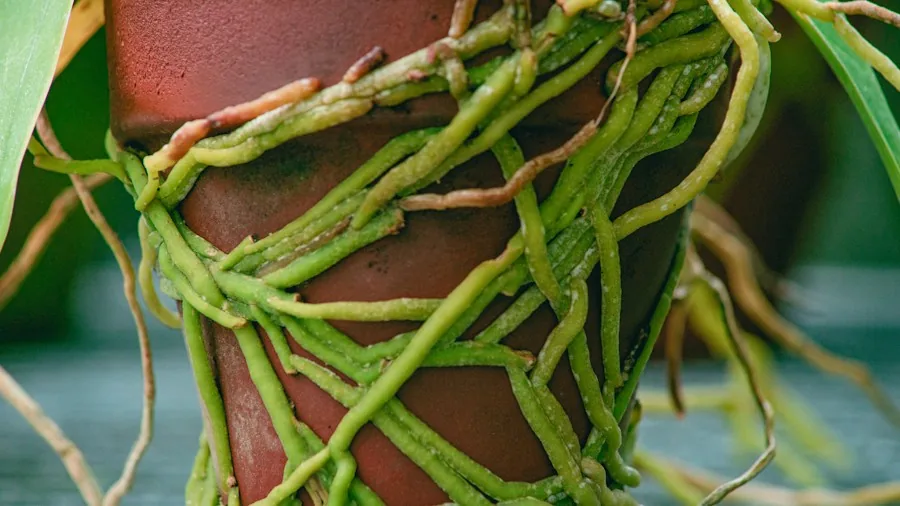
Next, remove the pot and inspect the roots carefully. Healthy roots feel plump and firm when squeezed gently. After watering, they appear green; once dry, they take on a silvery color. Rotted roots are brown and mushy, and the outer layer may slip away completely if pinched, leaving only a thin fiber inside. This is a genuine concern requiring immediate action.
Most critically, look at the crown, which is the central point where new leaves emerge. A healthy crown appears firm and green. If it looks soft, black, or wet, crown rot has likely developed, often caused by water molds. This condition spreads rapidly and can kill the entire plant if not addressed.
On the positive side, watch for new leaves unfurling from the crown or fresh green root tips forming near the base. These signs indicate your orchid is actively growing and thriving.
Taking Action Based on Your Findings
If your plant checks out healthy in all these areas, leave the keiki alone. A spike keiki without its own roots draws water and nutrients directly from the parent’s flower stem, so removing it won’t help a struggling plant recover. Many experienced growers wait until a keiki develops at least one or two true leaves and roots measuring 1 to 1.5 inches before separating and potting it independently.
If you did discover problems, address them specifically. Use sterile, sharp pruning tools to remove any rotted roots back to firm tissue, disinfecting your blades between cuts. Repot using a specialized orchid bark mix designed for the species you’re growing. Like other houseplants requiring specific growing conditions, orchids need their particular potting environment to thrive after recovery.
Water sparingly until new roots develop in the fresh bark, and water only in the morning so leaves dry before nightfall. Remove any water pooling in the crown. Place your orchid in bright, indirect light, away from cold windows or heating vents.
Can Your Orchid Recover?
A moth orchid with some remaining plump roots and a firm crown can bounce back once you improve its care, though new leaf growth may take time. Crown rot represents a much more serious situation. This is where a keiki becomes genuinely valuable. If the parent plant deteriorates beyond recovery, the keiki carries the parent’s genetics and can perpetuate that particular orchid variety. Keep the keiki attached as long as the parent remains viable.
For plants with no keiki but a green flower spike, you can try applying commercial keiki cloning paste to encourage one to form, though results vary. The bottom line: don’t write off your orchid based on a keiki alone. Examine the full plant thoroughly, fix any actual problems, and you may be rewarded with not one but two thriving orchids. Much like planning appropriate protection for your outdoor plants during cold months, proper orchid care starts with understanding what you’re looking at.





Write Your Review
No reviews yet. Be the first to share your experience!