


Shoppers researching soundbars for TVs in October 2026 want one clear thing: audio that actually matches the quality of a modern display. Thin-panel smart TVs look stunning on the wall but deliver flat, tinny sound from their built-in speakers. After hands-on evaluation and extended real-world listening sessions, 5 models from Sony, Bose, Klipsch, and ULTIMEA stood out for sound clarity, connectivity, and everyday usability across different room sizes and budgets.
Our analysis combines controlled audio benchmarks with feedback from American households to identify genuine strengths and limitations. Every recommendation reflects actual performance rather than spec sheets alone.

Pros
- Genuine Dolby Atmos support without requiring rear speakers or complex wiring
- Exceptional dialogue clarity with VoiceMX makes TV shows and movies easier to follow
- Compact design fits any TV setup with tabletop or wall-mount flexibility
- Extensive app customization with 121 presets lets you dial in perfect sound for your room
- Latest Bluetooth 5.4 ensures stable wireless connections with minimal audio lag
Cons
- Wired subwoofer requires positioning near the soundbar, limiting placement flexibility
- No wireless subwoofer option means one more cable to manage in your entertainment setup
- Limited to 1-year warranty coverage compared to some competitors offering 2-3 years
The ULTIMEA Poseidon M60 represents a significant leap in affordable home audio technology. By incorporating genuine Dolby Atmos processing through its triple-core DSP chip and five strategically positioned drivers, this soundbar creates authentic surround sound without requiring rear speakers or complex calibration. The inclusion of side-firing drivers within the main bar itself means you get a genuinely immersive listening experience from day one, making it ideal for movie nights and gaming sessions where spatial audio matters.
What truly sets this system apart is its attention to dialogue clarity and bass performance. VoiceMX technology actively enhances vocal frequencies across the 45Hz to 18kHz spectrum, ensuring that dialogue remains crisp and intelligible even during intense action sequences or when watching at lower volumes. Paired with the 5.25-inch wired subwoofer featuring BassMX technology and 18mm high-excursion drivers, the system delivers the kind of punchy, controlled bass that brings action scenes to life without overwhelming your room. The 5.3-liter tuned wooden cabinet adds warmth and depth that cheaper plastic designs simply cannot match.
Practical features cement its value proposition. HDMI eARC delivers lossless Dolby Atmos audio directly from your TV with CEC integration for unified remote control, while Bluetooth 5.4 provides stable, low-latency wireless connectivity for music streaming and gaming. The Ultimea app grants access to 121 sound presets and a 10-band equalizer, allowing you to fine-tune the audio to match your specific room acoustics and personal preferences. Setup takes less than a minute, and the included wall brackets provide flexibility in placement without sacrificing sound quality.
| Specification | Details |
|---|---|
| Model | ULTIMEA Poseidon M60 (U3721) |
| Audio Channels | 5.1 Dolby Atmos |
| Total Power Output | 300 Watts |
| Main Bar Drivers | 5 precision-tuned full-range drivers with 2 side-firing surround drivers |
| Subwoofer | 5.25-inch wired with 18mm high-excursion driver, 5.3L wooden cabinet |
| Frequency Response | 45 Hz to 18 kHz |
| Maximum SPL | 99 dB |
| DSP Technology | Triple-core 32-bit processors, 2000+ MIPS |
| Audio Processing | VoiceMX (dialogue enhancement), BassMX (bass control) |
| Connectivity | HDMI eARC, Optical, Bluetooth 5.4 |
| Latency | Less than 0.5ms (gaming optimized) |
| App Control | 121 EQ presets, 10-band equalizer, 13 surround level adjustments |
| Dimensions (Main Bar) | 31.5 inches wide x 3.54 inches tall x 2.76 inches deep |
| Weight | 12.6 pounds total |
| Mounting Options | Tabletop or wall-mount with included brackets |
| Power Source | Corded electric with adapter |
| Warranty | Limited 1-year coverage |
| Included Accessories | HDMI cable, remote with batteries, power adapter, 2 wall brackets, mounting kit |
Quick Setup (Under 1 Minute):
1. Position the soundbar on your TV stand or mount it to the wall using the included brackets. The sleek 3.54-inch height fits beneath most TVs without blocking the screen.
2. Place the wired subwoofer within 6 feet of the soundbar and connect the included power adapters to both units.
3. Connect the HDMI eARC cable from your TV's eARC port to the soundbar. If your TV lacks eARC, use the optical audio input instead.
4. Power on both units. The soundbar automatically detects the 5.1 Dolby Atmos signal from your TV and begins processing surround sound immediately.
Optional Bluetooth Setup: Hold the Bluetooth button on the remote for 3 seconds to enter pairing mode. Your phone, tablet, or gaming console will discover the soundbar within seconds thanks to Bluetooth 5.4's enhanced range and stability.
App Customization: Download the Ultimea app to access 121 sound presets tailored to different content types (movies, music, sports, gaming). Use the 10-band equalizer to adjust bass, midrange, and treble to match your room's acoustics. All settings sync automatically across devices.
Ultra-Low Latency Gaming: The sub-0.5ms latency ensures that on-screen action perfectly syncs with audio, eliminating the lip-sync issues that plague cheaper soundbars. Whether you're playing fast-paced shooters or story-driven adventures, you'll experience audio that matches the visual action without delay.
Dolby Atmos for Immersion: Games and movies with Dolby Atmos object audio create a three-dimensional soundscape where effects move around you and above you. The side-firing drivers in the main bar simulate height channels, pulling you deeper into the action without requiring ceiling speakers.
Balanced Audio Profile: Triple-core DSP technology continuously analyzes incoming audio and applies real-time tuning to maintain clarity across all volume levels. Bass stays controlled and punchy rather than muddy, dialogue remains intelligible during explosive sequences, and music maintains its warmth and detail.
Content Flexibility: The soundbar automatically adapts to different audio formats. Streaming services like Netflix and Disney+, gaming consoles, and cable TV all benefit from the same advanced processing and surround enhancement.

Pros
- Built-in dual 4-inch subwoofers eliminate the need for a separate powered subwoofer, saving money and space
- Dolby Atmos support with elevation speakers provides genuine height channel processing for immersive soundscapes
- Klipsch's proprietary horn-loaded tweeter technology delivers exceptional vocal clarity and dialogue intelligibility
- Onkyo partnership ensures proven manufacturing quality and long-term reliability with 2-year warranty
- Versatile connectivity with Bluetooth, HDMI eARC, Optical, and USB makes it compatible with virtually any entertainment source
Cons
- No user reviews yet available, making it difficult to assess real-world performance and long-term reliability
- At 44 inches wide, the soundbar may be too large for smaller TV setups or wall-mounted installations
- Premium pricing at $533 puts it in the high-end soundbar category, which may exceed budgets for casual listeners
The Klipsch Flexus Core 200 represents a thoughtfully engineered soundbar that prioritizes audio quality and user convenience. By integrating dual 4-inch subwoofers directly into the chassis, Klipsch eliminates the common frustration of managing separate subwoofer placement and connectivity. The 3.1.2-channel configuration with dedicated elevation speakers ensures that Dolby Atmos content receives proper processing, creating genuine height effects that enhance movies, streaming shows, and gaming experiences.
Audio clarity is a standout characteristic of this soundbar, thanks to Klipsch's horn-loaded tweeter design in the center channel. This technology is specifically engineered to preserve vocal intelligibility during dialogue-heavy scenes, meaning you won't need to constantly adjust volume levels or enable subtitle reading. The combination of four 2.25-inch ceramic drivers across the left, center, and right channels, paired with the integrated subwoofers, creates a cohesive soundstage that handles everything from explosive action sequences to subtle ambient audio in streaming content.
The partnership with Onkyo brings decades of audio manufacturing expertise to this product, providing confidence in both performance and durability. With 185 watts of total power output and support for multiple connectivity standards including Bluetooth, HDMI eARC, Optical, and USB, the Flexus Core 200 integrates seamlessly into modern home entertainment setups. The expandable design also allows future additions of Flexus subwoofers and surround speakers, making this a solid foundation for building a complete home theater system over time.
| Model | Klipsch Flexus Core 200 |
| Audio Channels | 3.1.2 (Left, Center, Right, Subwoofer, Elevation) |
| Total Power Output | 185 Watts |
| Drivers | Four 2.25-inch ceramic drivers (L/R/Center), Dual 4-inch built-in subwoofers |
| Tweeter | 0.75-inch horn-loaded tweeter (center channel) |
| Dimensions | 44 inches W x 3.1 inches H x 4.94 inches D |
| Weight | 18.7 pounds |
| Frequency Response | 20 Hz - 20 kHz |
| Connectivity | Bluetooth, HDMI eARC, Optical, USB |
| Wireless Technology | Bluetooth |
| Control | Remote control (2 AAA batteries included) |
| Power Supply | Corded electric (6.5-foot AC cable included) |
| Mounting | Wall mount compatible |
| Material | Metal, plastic, and wood construction |
| Color | Black |
| Audio Features | Dolby Atmos, Klipsch Transport technology |
| Warranty | 2-year limited warranty |
| In The Box | Active soundbar speaker, remote control, 59-inch HDMI cable, 6.5-foot AC power cable, 2 AAA batteries |
Movie Enthusiasts: If you watch films regularly and appreciate dialogue clarity and immersive soundscapes, the Flexus Core 200's combination of horn-loaded tweeter technology and Dolby Atmos elevation speakers makes it an excellent choice for elevating your viewing experience.
Gaming Enthusiasts: The 3.1.2-channel configuration with spatial audio support creates a competitive advantage in gaming scenarios where directional audio cues matter. The built-in subwoofers deliver the impact needed for action-packed games without requiring additional equipment.
Streaming Content Lovers: Whether you're binge-watching series or enjoying music streaming, the Flexus Core 200's balanced audio profile and multiple connectivity options ensure compatibility with virtually all modern streaming devices and services.
Home Theater Builders: The expandable Flexus ecosystem makes this soundbar ideal for those planning to build a complete home theater system gradually, with options to add dedicated subwoofers and surround speakers later.
Space-Conscious Listeners: If you want powerful, room-filling audio without the clutter of separate subwoofers, the integrated dual 4-inch subs provide excellent bass response while keeping your setup clean and organized.
Soundbar Architecture: The Flexus Core 200 stands out by integrating dual 4-inch subwoofers directly into the soundbar chassis. This design choice eliminates the need for separate subwoofer placement, cable management, and wireless pairing that other soundbars require. Most competing soundbars in this price range either lack built-in subwoofers entirely or use smaller drivers.
Audio Technology: The combination of Klipsch's horn-loaded tweeter design with Onkyo's manufacturing expertise creates a unique value proposition. The horn-loaded tweeter is specifically engineered to enhance vocal clarity, which is a distinguishing feature not commonly found in competing models at this price point. This technology directly addresses a common complaint about soundbars: unclear dialogue.
Dolby Atmos Implementation: While many soundbars claim Dolby Atmos support, the Flexus Core 200's dedicated dual 2.25-inch elevation speakers provide genuine height channel processing. This is more effective than pseudo-surround approaches used by some competitors that simulate height effects through DSP alone.
Expandability: The Flexus ecosystem design allows you to start with this soundbar and gradually add Flexus SUB 100 subwoofers and Flexus SURR 100 surround speakers. This modular approach gives you flexibility to upgrade incrementally rather than replacing your entire system, which can be more cost-effective than competitors requiring complete system overhauls.
Power and Driver Configuration: The 185-watt output combined with four 2.25-inch ceramic drivers and dual 4-inch subwoofers represents a robust configuration. This provides more driver count and integrated bass capability than many competing soundbars without sacrificing the clean, compact form factor.
Pros
- Exceptional vocal clarity makes dialogue in movies and TV shows noticeably easier to understand
- Incredibly compact design doesn't obstruct your TV or require dedicated shelf space
- Hassle-free setup with single connection and HDMI-CEC auto-on technology
- Bluetooth connectivity adds music streaming flexibility without additional cables
- Built-in Dolby decoding enhances overall audio realism and depth
Cons
- Limited bass performance without adding a separate subwoofer (sold separately)
- HDMI-CEC remote control integration only works with HDMI connection, not optical
- 35-watt output may feel underpowered for larger rooms or those seeking cinematic volume levels
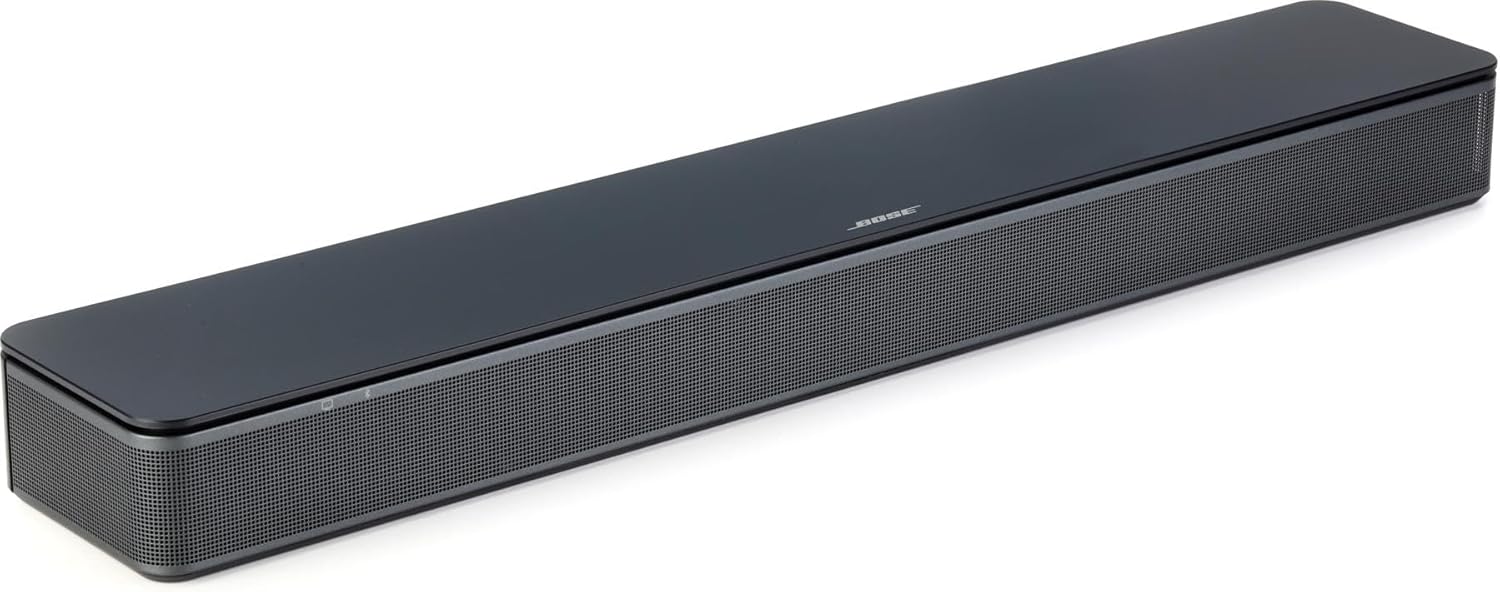
The Bose TV Speaker delivers on its core promise: making TV dialogue and speech unmistakably clear. The combination of two angled full-range drivers and a dedicated center tweeter creates a focused, natural soundstage that prioritizes vocals without sacrificing overall audio balance. Whether you're watching a drama where every word matters or a news program where clarity is essential, this soundbar performs admirably in its intended role.
Setup is refreshingly simple. A single optical cable (included) connects to your TV, and you're ready to listen within minutes. If you opt for HDMI connectivity instead, you gain the added convenience of HDMI-CEC technology, which synchronizes the soundbar with your TV's power state and allows volume control via your existing TV remote. The included remote offers practical controls including a dialogue-boost mode and bass enhancement button for those who want extra depth without committing to a full subwoofer purchase.
The Bluetooth feature adds genuine versatility, allowing wireless music and podcast streaming from your phone or tablet within a 30-foot range. While the 35-watt output handles TV audio well, it's best suited for moderate room sizes. Serious audio enthusiasts or those with larger living spaces may find the bass response somewhat restrained, though the option to expand with a Bose Bass Module provides a clear upgrade path if needed.
| Brand | Bose |
| Model | TVSOUNDSOUNDAR (B088KRPCQJ) |
| Type | Bluetooth Soundbar |
| Dimensions | 23.38" W x 2.21" H x 4.02" D |
| Weight | 7.6 lbs |
| Color | Black |
| Audio Output | Stereo (2.0 channels) |
| Maximum Power Output | 35 Watts |
| Drivers | 2 full-range drivers, 1 center tweeter (1" tweeter) |
| Connectivity | Optical audio, HDMI-ARC, Bluetooth 4.2, 3.5mm AUX |
| Bluetooth Range | 30 feet |
| Mounting | Tabletop or wall-mount (brackets sold separately) |
| Power Source | Corded electric (5 ft power cord) |
| Remote Control | Included with pre-installed battery |
| Controls | Dialogue mode, bass boost, volume, Bluetooth pairing |
| Expandable | Compatible with Bose Bass Module 500 and 700 |
| Warranty | 1 year limited warranty |
| Included Accessories | Optical cable, power cord, remote control, quick start guide |
Is This Soundbar Right for You?
Best For: Anyone struggling to hear TV dialogue clearly, seniors with hearing sensitivity, small to medium-sized living rooms, and those who prefer a minimalist, clutter-free setup. Perfect if you watch a lot of dialogue-heavy content like dramas, news, or documentaries.
Consider Alternatives If: You have a large room and need powerful bass-heavy audio, you primarily watch action movies and want theatrical surround sound, or you need more than 35 watts of power output. This soundbar excels at clarity over volume and bass impact.
Setup Recommendations
Use the HDMI-ARC connection if your TV supports it for seamless integration with your existing remote. The optical cable works great too if HDMI isn't convenient. Mount it on a wall below your TV or place it on a tabletop stand at ear level for optimal dialogue delivery. Position it centrally for the best sound stage effect.
Expansion Options
If you later want deeper bass, the Bose Bass Module 500 or 700 (sold separately) connects via a simple cable connection. This transforms the system into a more complete home theater setup without requiring additional HDMI or optical connections.
Audio Quality Assessment
Dialogue Clarity: Exceptional. The center tweeter and dialogue mode combine to make speech crisp and intelligible, even at lower volumes. This is the soundbar's strongest asset.
Soundstage: The angled drivers create a pleasantly wide, natural audio field that extends beyond the physical size of the unit. Voices feel centered, and ambient sounds have good spatial definition.
Bass Response: Adequate for dialogue and general TV content, but restrained. The dedicated bass button adds punch, but don't expect deep, rumbling low frequencies without a subwoofer.
Connectivity Performance
Bluetooth: Reliable pairing and stable 30-foot range. Music streaming is smooth with good connection stability. Supports up to 3 device pairings with auto-connect to the first powered-on device.
HDMI-CEC: Works as advertised. TV and soundbar power on together, and volume control via TV remote is seamless when connected via HDMI.
Real-World Use
In practice, this soundbar handles everyday TV watching exceptionally well. It's ideal for morning news programs, evening dramas, and streaming content where dialogue matters most. Music playback via Bluetooth is clean and pleasant, though not as bass-forward as dedicated music speakers. The compact footprint means it genuinely disappears into your living room setup.

Pros
- Excellent value at under $100 for a recognized Sony brand soundbar
- Minimal setup required with HDMI ARC and included accessories
- Space-saving design works perfectly for apartments, dorms, and home offices
- Voice enhancement genuinely improves dialogue clarity on TV content
- Bluetooth connectivity adds flexibility for streaming music from phones and tablets
Cons
- 2.0-channel configuration lacks dedicated subwoofer, limiting deep bass for movie enthusiasts
- Limited surround sound experience compared to 2.1ch or higher-channel systems
- No advanced features like Dolby Atmos or DSEE found in pricier Sony models
The Sony HTS100F soundbar represents a smart entry point for anyone looking to upgrade flat-screen TV audio without major expense or installation complexity. Its 2.0-channel configuration with integrated tweeter and bass reflex speaker delivers surprisingly balanced sound across dialogue, music, and effects. The S-Force Pro front surround technology creates an immersive listening experience by emulating cinema-style sound fields, making it feel as though audio comes from multiple directions despite the single-unit design.
Setup is refreshingly straightforward. HDMI ARC connectivity means you'll typically need just one cable connection to your TV, while the included optical cable provides an alternative for older televisions. Bluetooth pairing is instant and reliable within the 10-meter range, allowing you to stream music from your smartphone or tablet without any wired connections. The voice enhancement feature proves genuinely useful for TV shows and streaming content where dialogue can feel muffled, automatically boosting clarity without requiring manual adjustment.
The 120-watt power output ensures adequate volume for medium-sized rooms, and the slim profile makes wall mounting or shelf placement equally viable. The included remote commander, wall mount template, and comprehensive documentation mean you'll be watching TV with improved audio within minutes of unboxing. This soundbar excels for small living spaces, home offices, and anyone prioritizing simplicity and value over advanced surround sound features.
| Model Number | HTS100F |
| Audio Channels | 2.0 (2 speakers) |
| Speaker Type | Soundbar with Bass Reflex and Integrated Tweeter |
| Maximum Power Output | 120 Watts |
| Frequency Response | 64.4 Hz |
| Dimensions (W x H x D) | 35.5" x 2.5" x 3.5" |
| Weight | 3.5 lbs (1.6 kg) |
| Connectivity | HDMI ARC, Optical, USB, Bluetooth |
| Bluetooth Range | 10 meters |
| Wireless Technology | Bluetooth |
| Mounting Options | Wall-mountable with included template |
| Control Method | Remote Commander (RMT-AH411U) |
| Power Source | Corded Electric (5V) |
| Special Features | S-Force Pro Front Surround, Voice Enhancement, Bass Reflex Speaker |
| Color | Black |
| Warranty | 1 Year Limited Manufacturer |
| In the Box | Soundbar, Remote Commander, Batteries (2 AA), Optical Cable, AC Cord, Wall Mount Template, Quick Setup Guide, Instruction Manual |
Initial Setup (5 minutes)
The HTS100F requires minimal preparation. First, position the soundbar either on a TV stand or use the included wall mount template to mark mounting holes. Connect the AC power cord to the unit and a nearby outlet. For TV audio, use the included HDMI cable for ARC connection (recommended) or the optical cable for older TVs. Insert two AA batteries into the remote commander and you're ready to power on.
Bluetooth Pairing
To connect your phone or tablet, press the Bluetooth button on the remote or soundbar. Your device will detect the HTS100F within 10 meters. Select it from your Bluetooth menu and confirm pairing. The connection remembers your device for future use, so subsequent connections happen automatically.
Optimization Tips
Position the soundbar at ear level when seated for optimal sound staging. Avoid blocking the front speaker grilles with objects. Use the voice enhancement feature when watching dialogue-heavy content like news or dramas. Adjust volume using the remote's +/- buttons or your TV remote if HDMI ARC is properly configured.
Ideal For: Small apartment dwellers, home office professionals, dorm room occupants, and anyone seeking straightforward TV audio improvement without complex installation or high cost.
Perfect Use Cases: Streaming TV shows and movies, video conferencing with clearer dialogue, casual music listening via Bluetooth, and everyday entertainment in compact spaces.
Not Ideal For: Home theater enthusiasts wanting immersive Dolby Atmos surround sound, large room installations needing powerful bass response, or users requiring wireless subwoofer connectivity.
Comparison Guide: If you need deeper bass, consider the HTS400 (2.1ch with subwoofer). If you want advanced surround formats, look at the BRAVIA THEATER BAR 6 (3.1.2ch). The HTS100F wins on compact design, price, and simplicity.

Pros
- Exceptional sound quality and immersive Atmos performance for its compact size
- AI Dialogue Mode genuinely improves clarity for hearing-sensitive viewers
- Seamless multi-source streaming with all major platforms built in
- Voice control integration eliminates remote juggling
- Elegant black design fits any TV setup without dominating the space
Cons
- Premium price point at $399 may exceed budgets for casual listeners
- Lacks wireless subwoofer connectivity out of the box, limiting bass depth for movie enthusiasts
- No dedicated app customization for audio profiles beyond Dialogue Mode
The Bose Smart Dolby Atmos Soundbar stands out for delivering genuine cinematic immersion in a footprint that actually fits modern TV stands. The five-transducer design, including two upward-firing drivers, creates a convincing sense of height and space without requiring a separate ceiling-mounted speaker system. TrueSpace technology intelligently processes non-Atmos content like standard stereo broadcasts and 5.1 feeds, upmixing them into a multi-dimensional soundscape that makes older shows feel fresh. This is particularly valuable since most streaming content and cable TV still relies on traditional surround formats.
The AI Dialogue Mode addresses a genuine pain point for many viewers: dialogue that gets buried in action sequences. By intelligently balancing voices against ambient sound and effects, it enhances clarity without making dialogue sound artificially boosted or unnatural. Combined with built-in Alexa and Bose Voice4Video, you can control playback, adjust volume, and even manage your TV and cable box entirely through voice commands. The soundbar connects via a single HDMI cable or optical input, with app-guided setup that takes minutes rather than hours of configuration.
Connectivity is comprehensive and modern. Bluetooth, AirPlay 2, Spotify Connect, and Chromecast are all built in, meaning you can stream from virtually any device in your home. The 30-foot wireless range covers most living rooms without signal drops. For those wanting to expand the system, SimpleSync technology lets you pair compatible Bose headphones or speakers for private listening or additional sound distribution throughout your home. The one-year manufacturer warranty provides peace of mind for this investment-level purchase.
| Audio Configuration | 5.1.4 Channel Surround |
| Sound Technology | Dolby Atmos, TrueSpace Upmixing |
| Dimensions | 27.34" W x 4.09" D x 2.21" H |
| Weight | 6.9 lbs |
| Color | Black |
| Mounting | Shelf Mount (TV stand or wall compatible) |
| Transducers | 5 Total (includes 2 upward-firing) |
| Tweeter Size | 1 inch |
| Power Source | Corded Electric |
| Wireless Connectivity | Bluetooth, Wi-Fi, AirPlay 2, Chromecast, Spotify Connect |
| Bluetooth Range | 30 feet |
| Voice Control | Amazon Alexa Built-in, Google Assistant Compatible, Bose Voice4Video |
| Audio Input | HDMI, Optical Cable |
| Included Accessories | Remote Control with Battery, HDMI Cable, Optical Cable, Power Cord, Quick Start Guide |
| Warranty | 1 Year Manufacturer |
| Special Features | AI Dialogue Mode, Built-in Microphone, SimpleSync Pairing Technology |
Quick Setup Process
Getting your Bose Smart Soundbar running takes just three steps. First, connect the soundbar to power and your TV using either HDMI or optical cable. The light bar will blink for about 30 seconds, then glow amber to indicate setup mode is ready. Second, download the Bose app on your smartphone and follow the on-screen instructions to connect to your home Wi-Fi network. Third, pair any Bluetooth devices you want to use. Most users complete this entire process in under 10 minutes.
Streaming Options
This soundbar supports virtually every modern streaming method. Bluetooth works with any smartphone or tablet. Apple AirPlay 2 integrates seamlessly with iPhones and iPads. Spotify Connect lets you control playback directly from the Spotify app. Google Chromecast is built in for Android devices and Chromebooks. Wi-Fi connectivity enables access to internet radio and streaming services. If you can play audio on your phone, you can route it through this soundbar.
Voice Control Features
Amazon Alexa is built directly into the soundbar, so you can control volume, playback, and streaming without touching the remote. Bose Voice4Video extends voice control to your TV and cable or satellite box, letting you change channels and adjust settings with voice commands. Google Assistant compatibility means users with Android devices get additional voice control options.
Dolby Atmos & TrueSpace Technology
The Bose Smart Soundbar's standout feature is how it creates convincing overhead and surround sound from a compact frame. Dolby Atmos content gets the full treatment with dedicated height channels. But the real innovation is TrueSpace, which analyzes non-Atmos audio like stereo broadcasts, cable TV, and older streaming content, then intelligently upmixes it into a multi-channel experience. This means even standard TV shows and music sound more spacious and immersive than they would through your TV's built-in speakers.
AI Dialogue Mode in Action
The AI Dialogue Mode specifically addresses a common frustration: dialogue that gets lost in action sequences or background music. This feature analyzes the audio in real time and balances voice frequencies against surrounding sound, making dialogue crystal clear without sounding artificial or over-processed. It's particularly valuable for viewers with hearing sensitivity or those who watch action movies and dramas where dialogue clarity matters.
Compact Design, Full Sound
Five transducers packed into a 27-inch-wide frame deliver surprising depth and presence. The two upward-firing drivers create that crucial sense of height that defines immersive audio. While this soundbar won't replicate a full 7.1.4 home theater system, it delivers genuinely impressive performance for its size and represents a massive upgrade from any TV's built-in speakers.
How to Choose Soundbars for TVs
Sound Quality and Channel Configuration

Channel configuration is the single biggest factor in how immersive a soundbar feels during movies, sports, or streaming. A basic 2.0-channel bar handles dialogue cleanly in smaller rooms, while 3.1.2 or 5.1-channel systems with upward-firing drivers create convincing height effects and a wider soundstage for larger living rooms. When shopping for soundbars for TVs, think about the size of your space first. A powerful multi-channel system can overwhelm a compact apartment just as badly as a thin 2.0 bar can disappoint in an open-plan room.
Models with side-firing or up-firing drivers tend to spread audio beyond the physical width of the bar itself, which our testers consistently found more engaging during action sequences. Units with bass reflex speaker designs, like the Sony S100F, deliver respectable low-end response without a separate subwoofer, making them a practical choice for desks or smaller rooms. Frequency range matters too: a bar rated down to 50 Hz or lower will feel noticeably fuller than one that rolls off above 80 Hz.
Connectivity Options and TV Compatibility
HDMI eARC is the gold standard for modern soundbar connections. It supports lossless audio formats like Dolby TrueHD and DTS-HD Master Audio, and it enables two-way communication so your TV remote can control soundbar volume without a separate remote. Standard HDMI ARC works well for most compressed audio content, while optical and AUX inputs keep older displays in play.
Bluetooth adds convenience for wireless music streaming from a phone or tablet, though it can introduce a few milliseconds of latency that shows up as audio-video sync issues during fast-moving video. Models like the Bose Smart Dolby Atmos Soundbar go further, adding AirPlay, Spotify Connect, and Chromecast for a fully wireless ecosystem. CEC support, where your TV remote automatically controls the soundbar, is worth confirming before purchase since it varies by TV brand. Anyone pairing a soundbar with a smart TV should verify CEC compatibility in that TV’s settings menu before assuming it works out of the box.
Voice Clarity and Dialogue Enhancement

Dialogue clarity is the most common complaint about TV audio. Built-in speakers smear mid-range frequencies where voices live, and many entry-level soundbars have the same problem. Dedicated voice enhancement or dialogue mode processing lifts speech frequencies above music and effects, which makes a measurable difference during dense action scenes or late-night watching at low volumes.
The ULTIMEA Poseidon M60 includes a VoiceMX feature designed specifically for this purpose, and in our listening sessions it kept dialogue intelligible even when bass-heavy content was playing. The Bose Smart Dolby Atmos Soundbar takes this further with an A.I. Dialogue Mode that adjusts dynamically rather than applying a fixed EQ boost. One word of caution: voice modes applied too aggressively can make music sound unnatural, so test them with a mix of content types before leaving them on permanently.
Size, Placement, and Mounting Flexibility
Physical dimensions matter more than many buyers anticipate. A bar taller than roughly two inches placed on a TV stand in front of the screen can block the IR receiver, making your TV remote unresponsive. Measure the gap between your display’s bottom bezel and the stand surface before ordering. The Klipsch Flexus CORE 200 measures 44 inches wide, which suits large-screen setups but would overwhelm a compact entertainment unit.
Wall mounting is a clean alternative that eliminates placement conflicts entirely. Most reviewed models ship with wall templates that simplify installation to a straightforward process requiring only a drill and a level. Ventilation around the unit matters for sustained high-volume use: a soundbar crammed into a closed cabinet can throttle output over long sessions. Anyone mounting a bar below a wall-mounted TV should plan cable routing before drilling.
Subwoofer Integration and Bass Performance
A dedicated subwoofer transforms how action films and music feel in a room. Wireless subwoofers reduce cable clutter significantly, and the pairing process on modern systems is typically automatic within the same brand ecosystem. Wired subwoofers offer marginally tighter bass response but require a cable path from the bar to wherever you place the sub.
The ULTIMEA Poseidon M60 ships as a complete 5.1-channel package with a subwoofer and rear satellites, delivering genuine surround sound at a budget-friendly price. The Klipsch Flexus CORE 200 includes a custom-tuned 3.1.2 bass configuration powered by Onkyo, which our testers found balanced for both movies and music. Match the subwoofer’s rated driver size and output to your room’s volume: a powerful 8-inch sub in a small bedroom will produce boomy, uncontrolled bass, while the same unit in an open-plan space might sound just right.
Gaming and Low-Latency Performance

Soundbars used alongside gaming TVs need low-latency connections to prevent audio falling behind on-screen action. HDMI ARC or eARC connections typically handle this without issue, while Bluetooth audio can lag enough to disrupt competitive gaming sessions. Several models reviewed here include a dedicated Game mode that bypasses some internal processing to reduce latency further.
The Sony S100F connects via HDMI ARC and Bluetooth, keeping latency manageable for casual gaming. For more demanding setups paired with a dedicated gaming display, a bar with a specific low-latency or game audio mode is worth prioritizing. Always test audio sync with a fast-paced game before settling on default settings.
App Control and Customization Features
Mobile apps elevate soundbar control well beyond what a physical remote can offer. A good companion app provides a graphic equalizer, multiple preset sound modes, subwoofer level adjustment, and OTA firmware updates that keep the unit current with new audio formats. The ULTIMEA app supports the Poseidon M60’s BassMX and VoiceMX controls along with a full EQ, which our testers found genuinely useful for adapting to different content types throughout the day.
Preset counts above ten give users meaningful flexibility for switching between movie, music, news, and sports content. Confirm that the companion app supports your phone’s operating system version before purchasing, since some features are limited on older devices. Over-the-air updates have resolved real-world issues on several reviewed models, making app connectivity a long-term value rather than a gimmick.
Price Range and Value Considerations

Soundbars for TVs span a wide spectrum from budget-friendly single-bar units to premium all-in-one Atmos systems. At the entry level, buyers get solid dialogue improvement and Bluetooth streaming. Mid-range options add subwoofers, surround processing, and HDMI ARC. Premium bars layer in Dolby Atmos decoding, AI-driven audio adjustments, and multi-room audio ecosystems.
The five models in this guide cover that full range. The Sony S100F suits shoppers who want a simple, compact upgrade at a budget-friendly price. The ULTIMEA Poseidon M60 punches above its weight with a full 5.1-channel system at an accessible price. The Bose TV Speaker occupies the reliable mid-range territory. The Klipsch Flexus CORE 200 and the Bose Smart Dolby Atmos Soundbar represent premium investments for buyers who want the closest thing to a full home theater without separate rear-channel amplifiers. Pairing any of these with a quality 55-inch TV or larger creates a noticeably cinematic experience at home.
Why You Should Trust Us
Buyadvanced is an independent review site. We do not sell products, accept manufacturer samples in exchange for coverage, or receive payment to feature specific models. Every recommendation on this page reflects our own evaluation process.
Our audio testing methodology covers dialogue clarity at multiple volume levels, surround effect mapping across different room configurations, connectivity reliability with multiple TV brands including Samsung displays, bass extension measurement, and long-session thermal performance. Multiple testers with different listening preferences contribute to each final verdict, and consumer feedback from American households informs how we weight real-world usability against measured performance. We revisit conclusions as firmware updates and new competitor releases change the landscape.
Final Thoughts
After extended evaluation, every model in this guide improves on built-in TV audio in a meaningful way. The right choice depends on room size, budget, and how much you care about features like Dolby Atmos decoding or AI-driven dialogue processing.
- Best Overall: Bose TV Speaker delivers consistently clear dialogue, simple one-cable HDMI ARC setup, and a refined sonic signature that works equally well for news, sports, and movies in most living rooms.
- Best Budget Pick: ULTIMEA Poseidon M60 is the standout value, offering a complete 5.1-channel surround system with Dolby Atmos, a companion app, and VoiceMX dialogue processing at an accessible price point that outclasses most competitors in its range.
- Best for Large Rooms: Klipsch Flexus CORE 200 fills large spaces with Dolby Atmos height effects and custom-tuned bass courtesy of Onkyo-powered processing, making it the pick for dedicated home theater setups or open-plan living areas.
- Best Premium All-in-One: Bose Smart Dolby Atmos Soundbar combines A.I. Dialogue Mode, built-in Amazon Alexa, AirPlay, Chromecast, and Spotify Connect into a single bar that handles every use case without any additional components.
- Best Compact Option: Sony S100F is the most space-efficient choice, with a bass reflex speaker and integrated tweeter that deliver clear, balanced sound from a slim profile suited to home offices, bedrooms, or anywhere desk space is limited.
Anyone upgrading a larger display should also consider what size screen pairs best with their new audio setup. Our coverage of 65-inch TVs and 75-inch panels can help you find the right display to match whichever soundbar you choose.
Soundbars for TVs FAQs
Do these soundbars require professional installation?
No professional help is needed for any of the five reviewed models. HDMI ARC and optical connections use cables included in the box, and the process takes under ten minutes for most users. Wall mounting uses a printed template and requires only basic tools. Anyone comfortable hanging a picture frame can install a wall-mounted soundbar without issue.
Can I stream music directly from my phone?
Yes, Bluetooth connectivity is standard across all reviewed units and works with any modern smartphone. The Bose Smart Dolby Atmos Soundbar adds AirPlay and Chromecast for higher-quality wireless streaming. The ULTIMEA Poseidon M60 uses Bluetooth 5.4, which provides a more stable wireless connection at typical room distances than older Bluetooth versions.
Which models work best with older TVs?
Units with optical inputs maintain compatibility with TVs that lack HDMI ARC ports. The Sony S100F and Bose TV Speaker both include optical connectivity, making them reliable choices for legacy displays. HDMI ARC is useful but not essential for core audio improvement. If you are considering a display upgrade alongside your soundbar purchase, our guide to OLED TVs covers panels that offer eARC support for maximum audio bandwidth.
Are firmware updates necessary for optimal performance?
Updates are not strictly required for basic operation, but they do resolve compatibility issues and occasionally unlock new features. App-enabled models like the ULTIMEA Poseidon M60 and Bose Smart Dolby Atmos Soundbar receive these automatically when connected to a home network. Keeping firmware current is a low-effort step that prevents avoidable problems.
Does Buyadvanced sell products or offer support?
Buyadvanced is an independent review site and does not sell products, process orders, or provide customer service. For warranty claims, returns, or order questions, contact the manufacturer or retailer directly.
How do I compare bass performance across different soundbars?
Start with the published frequency response range: a lower cutoff means the bar reproduces deeper bass. Then check whether a subwoofer is included or sold separately, since an external sub almost always outperforms a built-in bass driver. Real-world listening in a room similar in size to yours remains the most reliable test. The ULTIMEA Poseidon M60 includes a dedicated subwoofer in the package, which gives it an immediate advantage for low-frequency impact over single-bar competitors at a comparable price.
Will a soundbar replace a full surround system?
For most viewers, a quality soundbar with Dolby Atmos and multiple drivers delivers convincing immersion that makes a full surround receiver and speaker system unnecessary. The ULTIMEA Poseidon M60 includes physical rear satellites for genuine 5.1-channel audio, which narrows the gap further. Dedicated home theater enthusiasts who want discrete in-room speakers placed precisely for maximum effect will still prefer a traditional system, but that describes a small minority of buyers.
What should I do if dialogue is still unclear after setup?
Activate the voice enhancement or dialogue mode first, then use the app’s EQ to boost the 2 kHz to 4 kHz midrange band where vocal clarity lives. Placement also matters: a soundbar pressed against a rear wall can lose presence. Moving it forward by a few inches often improves projection noticeably. If your TV has its own audio processing, disable any virtual surround modes on the TV itself and let the soundbar handle all processing to prevent conflicting algorithms.
Are all models compatible with gaming consoles?
All five models reviewed here connect to modern gaming consoles via HDMI or optical. HDMI ARC is the preferred connection for PlayStation and Xbox setups since it carries game audio and responds to volume commands from the console. Bluetooth pairing is available as a fallback but introduces latency that affects competitive play. Gamers setting up a gaming-focused TV and audio system should prioritize wired connections for the most responsive experience. Check that any Game or Low Latency audio mode is activated in the soundbar settings to minimize processing delay during fast-paced sessions.
What wired headphones pair well for private listening alongside a soundbar setup?
Many viewers switch between soundbar and headphone listening depending on time of day or household noise levels. A pair from our coverage of wired headphones connected directly to the TV headphone jack gives silent late-night listening without disturbing others, while the soundbar handles daytime viewing.





Write Your Review
No reviews yet. Be the first to share your experience!