

The Saw Choice That Changes Your Workshop Experience
When building out a DIY toolbox, buyers new to woodworking often assume that simpler tools are always better. That logic makes sense in many cases, but it breaks down completely when you start looking at miter saws. A single-bevel model sounds like the straightforward choice, yet it actually creates more work and frustration than a dual-bevel alternative. Understanding this difference matters because it shapes how smoothly your projects move forward.
What Single Bevel and Dual Bevel Actually Mean
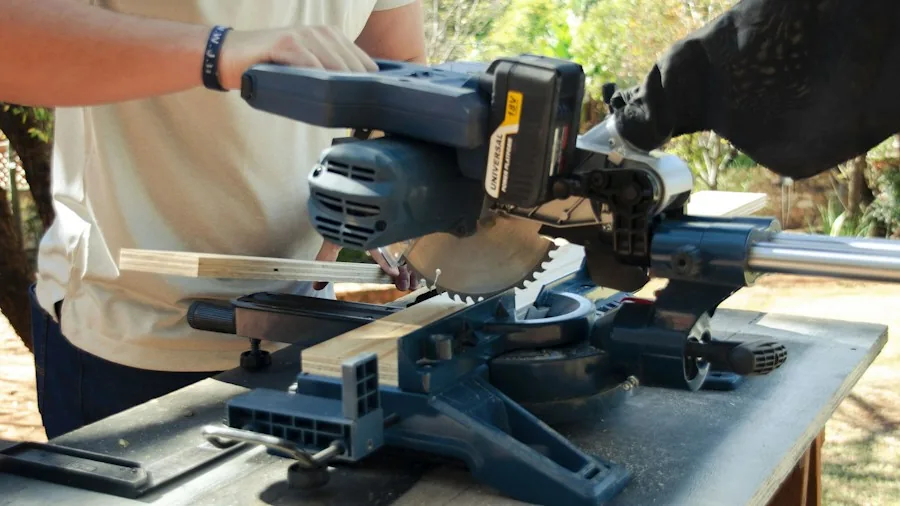
A miter saw performs angled cuts by tilting its blade sideways, called a bevel angle. You can also swivel the table left or right to create a miter angle. Combining these movements produces what professionals call a compound cut. A single-bevel saw typically tilts in only one direction, usually left, with the motor positioned to the right of the blade. This design gives right-handed users a clear view of the cut line. A dual-bevel saw, by contrast, tilts both left and right, offering flexibility to position your workpiece comfortably and see your cut line from either side without repositioning the material.
Why Single Bevel Creates Hidden Complications
Working with a miter saw already demands focus. You track measurements, position the blade accurately, support your workpiece firmly, and keep your hands safely away from the descending spinning blade. Add an angled joint into the mix, and you must also visualize how two cut pieces will fit together. With a single-bevel saw, you face an additional burden: if you need the blade to tilt the opposite direction, you must flip your board around entirely.
Imagine cutting trim in a typical garage shared with a workbench, storage shelves, and other equipment. Repositioning your material, resetting all your supports, and double-checking orientation before each cut multiplies your chances of error. That mental load grows even heavier during renovation work, where you might measure pieces in one room, carry them to your saw in another, and struggle to remember which direction the angle runs after moving your board. The right saw for your space matters just as much as the right blade, and a dual-bevel option keeps your mind clearer.
Dual Bevel Delivers Practical Convenience
A dual-bevel saw eliminates the need to flip your workpiece just because the blade tilts the wrong way. You can position your material for a comfortable cutting stance and a visible cut line from either side. This flexibility prevents costly mistakes born from confusion and fatigue. On shorter pieces, even a simple orientation change gives you another chance to lose track of what you are cutting. Different saws serve different purposes, but when you are working with angles, versatility prevents rework.
During real renovation projects, your saw setup rarely sits beside your actual work. You measure in one location, walk to your shop with the board, make your cut, and walk back. Keeping track of cut direction, angle orientation, and which side to cut becomes mentally exhausting. A dual-bevel saw removes one variable from that puzzle by letting you cut the angle you need without rethinking your entire approach.
When Single Bevel Still Makes Sense
Single-bevel saws do have their place. If your work consists mostly of square crosscuts and straightforward miters with an upright blade, you may never need the second bevel direction. Budget matters too: single-bevel saws typically cost less, making them attractive for budget-conscious buyers expanding their tool collection. However, dual-bevel capability alone does not improve accuracy, blade quality, or cutting capacity. Those features deserve separate consideration regardless of bevel type.
The real question comes down to value. Compare two otherwise comparable saws and check the price difference between single and dual bevel models. Each saw type serves a distinct purpose in your workshop, and investment in flexibility often pays dividends across future projects. If the dual-bevel convenience fits your budget, the money spent protects you against frustration and mistakes across years of work on projects you have not yet imagined.
Making Your Purchasing Decision
Your saw choice shapes not just today’s project but how comfortable and confident you feel tackling future jobs. A dual-bevel miter saw lets you focus your mental effort on the precision and technique that matter most. The machine handles the directional flexibility, leaving you free to concentrate on measurements, cuts, and joints. That division of labor between your brain and your tool is where smarter buying begins.


Write Your Review
No reviews yet. Be the first to share your experience!