

Adding expedition gear and a rooftop tent to a pickup truck promises adventure and capability, but recent performance testing reveals significant trade-offs that buyers should understand before committing to an overland setup. A 2026 Ford Ranger Raptor underwent comprehensive testing at the track after being equipped with nearly 450 pounds of accessories, and the results show that the pursuit of off-road readiness comes with measurable costs to acceleration, fuel economy, and overall efficiency.
The Weight Factor and Acceleration Penalty
When the Ranger Raptor received its full overland package, including a rooftop tent, cargo bed rack, and storage pods, the truck’s curb weight climbed from 5,358 pounds to 5,804 pounds. That extra 446 pounds of gear fundamentally altered the truck’s performance characteristics at the test track. The heavier configuration needed 5.8 seconds to reach 60 miles per hour, compared to 5.2 seconds in its baseline state. The zero-to-60 time from a standstill also suffered, increasing from 5.8 seconds to 6.5 seconds. Quarter-mile performance showed similar degradation, with the loaded truck completing the distance in 14.6 seconds at 93 miles per hour versus 13.9 seconds at 98 miles per hour without the gear. For buyers considering overland modifications, these numbers illustrate that expedition-ready trucks sacrifice some of the performance characteristics that make the Raptor platform appealing in the first place.
Fuel Economy Takes a Hit on the Highway
Beyond acceleration, fuel consumption emerged as a major concern. A baseline Ranger Raptor achieved 18 miles per gallon during steady highway driving at 75 miles per hour. Once outfitted with the complete overland setup, that figure dropped to 16 miles per gallon, a two-mile-per-gallon penalty that compounds over long journeys. The culprit lies partly in raw weight but equally in aerodynamic drag. The rooftop tent’s boxy profile disrupts airflow significantly at sustained highway speeds, forcing the engine to work harder to maintain pace. Anyone planning extended overland adventures should factor in substantially reduced fuel economy and the corresponding impact on trip costs and range between fill-ups.
One Surprising Benefit: Improved Braking
Not all results went sideways. The rear-mounted accessories created a more balanced weight distribution across the truck’s front and rear axles. Without gear, the Ranger Raptor’s weight split was 55.2 percent front and 44.8 percent rear. Adding the overland equipment shifted that to 50.3 percent front and 49.7 percent rear, nearly perfect equilibrium. This improved balance translated into shorter emergency braking distances. The laden truck stopped from 70 miles per hour in 211 feet, which was 12 feet shorter than the unloaded version. For buyers who venture into remote terrain or challenging driving conditions, this enhanced braking response represents a genuine safety advantage that partially offsets the performance losses elsewhere.
Aerodynamics and Design Considerations
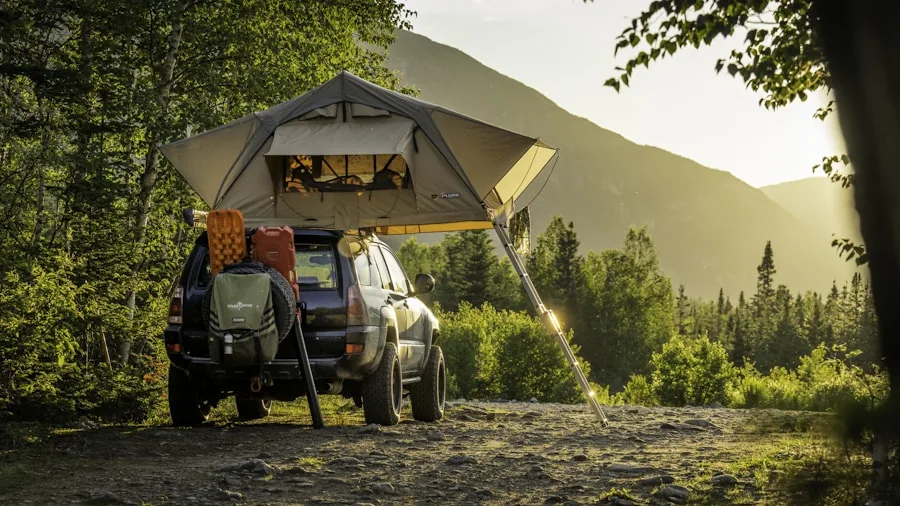
The overland conversion’s visual appeal masks a significant aerodynamic problem. The rooftop tent’s flat, blunt edges create drag that becomes increasingly problematic as speed increases. While such gear may look impressive in parking lots and generate positive comments from fellow enthusiasts, the streamlined silhouette of a truck equipped with a tonneau cover or aerodynamic bed cover delivers far better real-world efficiency. Buyers torn between visual impact and practical performance should recognize this fundamental trade-off.
What This Means for Overland Shoppers
The 2026 Ranger Raptor testing demonstrates that transforming a modern truck into an expedition vehicle requires realistic expectations about performance compromise. The truck remains capable and functional with this gear installed, but owners pay measurable penalties in acceleration, highway fuel economy, and overall efficiency. Those who prioritize off-road adventure and rugged capability over track performance and fuel economy will find the trade worthwhile. However, shoppers who value responsiveness and economy should carefully consider whether a full overland conversion aligns with their actual usage patterns. Many buyers find middle-ground solutions, such as less draggy cargo solutions or lighter-weight alternatives to rooftop tents, provide better balance. Understanding these real-world performance impacts helps truck buyers make informed decisions that match their priorities and driving habits. For those serious about expedition work, the capability gains justify the performance cost. For weekend adventurers, a more conservative approach to truck modification might prove more satisfying in daily driving. Like the debate over truck platform choices, overland modifications ultimately depend on individual needs and honest assessment of how a vehicle will actually be used.



Write Your Review
No reviews yet. Be the first to share your experience!