

The Great Pot Drainage Debate Gets Turned on Its Head
For decades, gardeners have debated whether adding gravel, pebbles, or broken pot shards to the bottom of containers actually helps or hurts. The confusion is understandable: gardening advice shifted dramatically over the past twenty years, leaving shoppers uncertain about what really works. New research published in 2025 finally provides clarity on this long-standing question, and the findings may surprise you.
How the Gravel Myth Started
The practice of layering drainage materials at the base of pots dates back generations. Victorian-era gardening manuals specified the technique with striking precision: position a terracotta shard concave-side down over the drainage hole, add exactly half an inch of crushed pot pieces or gravel, then top with coarse leaf mold. This level of detail made the advice seem authoritative, and it passed from nursery staff to garden clubs to home gardeners without anyone questioning whether it actually worked.
The reasoning behind the practice centered on a real physical phenomenon called the perched water table. After you water a container and drainage occurs, a band of saturated soil remains at the bottom. The theory held that a gravel layer would reduce this soggy zone, protecting roots from waterlogging and rot. For generations, this logic went untested.
The Myth Gets Busted, Then Re-Busted Again
In the early 2000s, university extension horticulturists challenged the tradition with persuasive arguments. They demonstrated that water moving through fine soil slows dramatically when it encounters coarse material like gravel. Instead of draining freely, water refuses to cross the boundary until the soil above becomes completely saturated. Their conclusion: gravel doesn’t prevent waterlogging but actually acts as a dam, elevating the soggy layer directly into the root zone of sensitive plants like succulents, lavender, and citrus. This warning spread rapidly through gardening publications and extension bulletins, convincing shoppers that bottom drainage layers could cause the very root rot they aimed to prevent.
But here’s where it gets interesting. That reversal was based on reasoning and field-soil experiments, not actual pot tests. For two decades, gardeners removed their gravel layers in fear. Then in 2025, researcher Avery Rowe published a rigorous study in PLoS ONE that finally tested the theory directly in containers. Using ten replicates across multiple potting mixes, coarse materials, and layer depths, the results surprised both camps.
What the New Science Actually Shows
Rowe’s findings contradicted the dam theory. Coarse drainage layers mostly reduced or had no negative effect on total water retention in containers. They almost never increased water held in the pot. Thicker aggregate layers actually drained better than thin ones. Most remarkably, a 2.5-inch layer of coarse sand performed better than any other combination tested. Rowe concluded that the raised-water-table warning should be considered inaccurate.
This doesn’t mean you must add gravel to every pot. Rather, it means containers are more forgiving than two decades of alarming warnings suggested. The new science shows that bottom drainage layers don’t automatically kill plants, contrary to what many shoppers have heard.
The Real Trade-off to Consider
While the 2025 research refutes claims about gravel acting as a dam, there remains a legitimate practical concern: a drainage layer takes up valuable root space. Two inches of stone in a ten-inch pot is significant real estate that plant roots could occupy. Additionally, river rock and pebbles add weight to large planters, which matters if you need to move containers indoors for winter or rearrange your porch.
For a lightweight alternative with proven benefits, consider mixing perlite or coarse sand throughout your potting mix rather than layering it at the bottom. This approach improves aeration from top to bottom without sacrificing root space.
When Gravel Actually Does Help
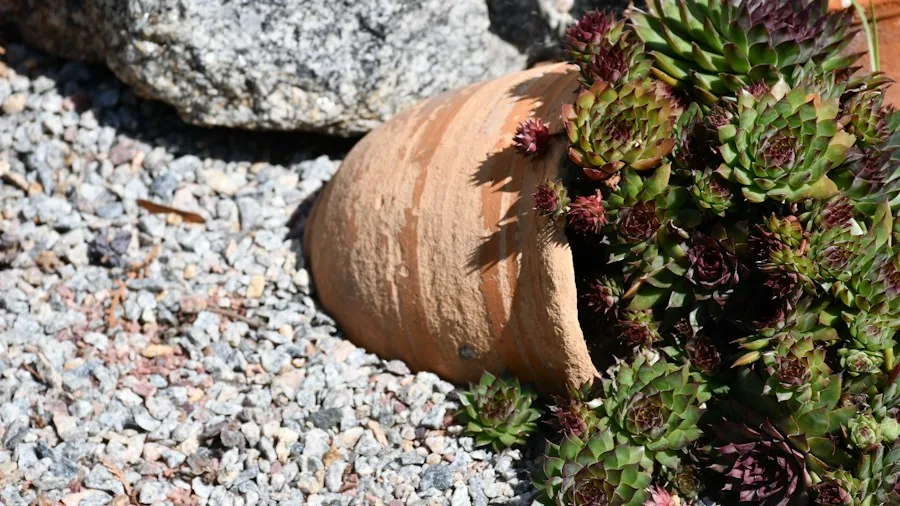
Despite the debate over bottom layers, gravel and coarse materials serve valuable purposes in container gardening. A few inches of ballast material stabilizes tall, top-heavy containers filled with ornamental grasses or evergreen topiaries that might tip in wind. A half-inch topdressing of fine pea gravel or poultry grit creates a polished look while reducing rainsplash on lower foliage. Mixing grit or pumice evenly through the entire container helps desert cacti, Mediterranean herbs, and alpine succulents thrive by opening air pockets throughout the soil. Lightweight expanded clay aggregate pebbles work similarly well for tropical plants needing extra aeration.
The Bottom Line for Shoppers
Rather than agonizing over whether to add a bottom layer, focus on proven winning strategies: select a quality, well-aerated potting soil, keep drainage holes clear and unobstructed, elevate containers off patio surfaces to prevent drainage blockage, and water according to your plant’s actual needs. Add a handful or two of perlite or coarse sand mixed through the soil if you want extra insurance against compaction. These straightforward steps will serve your containers far better than debating drainage layer doctrine.
Write Your Review
No reviews yet. Be the first to share your experience!