

Apple TV has become the exclusive home of Formula 1 racing in the United States, and now the tech giant is leveling up the viewing experience in a major way. Starting with the United States Grand Prix in Austin this October, Apple TV will deliver live F1 coverage in Dolby Atmos spatial audio for the first time ever. This development marks a significant milestone for sports broadcasting and could reshape how viewers experience live racing from their home theaters.
What Dolby Atmos Brings to the Broadcast
Dolby Atmos creates an immersive soundscape by adding spatial audio dimensions to traditional stereo or 5.1 surround sound. In the context of F1 racing, this means viewers will hear engines zoom across the room as cars navigate turns, experience the full roar of the crowd, and feel the visceral energy of the track atmosphere. The difference is dramatic: when you listen to the same race footage in stereo compared to Dolby Atmos, it becomes immediately apparent how much more engaging and realistic the spatial mix feels.
According to Apple’s Global Head of Sports, Jim DeLorenzo, the primary goal is to bridge the gap between watching from home and being trackside. The sound at a live F1 event is one of the most impactful elements of the experience, and bringing that intensity into living rooms helps fans feel more connected to the action. For viewers with a full surround sound setup, the benefit is transformative, allowing you to pinpoint car positions and movements simply by listening.
How Apple Made It Work
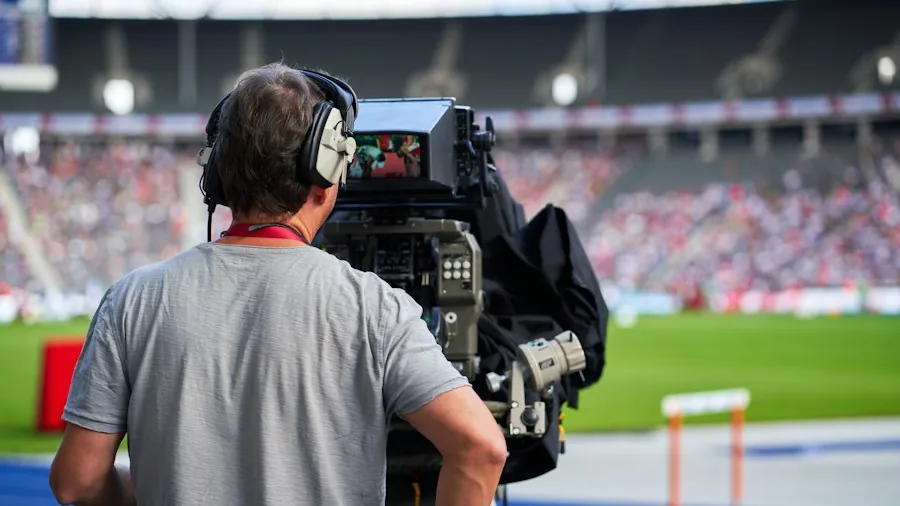
A key advantage of this implementation is that Apple didn’t need to redesign the entire broadcast infrastructure. The company worked with existing microphone arrays already positioned around the track, meaning no new equipment had to be installed at the venue. Apple’s technical team processed the standard audio feed and remixed it into Dolby Atmos format, demonstrating that innovation doesn’t always require a complete overhaul.
This approach also sets the stage for potential expansion to other Apple TV sports offerings, including Major League Soccer and Friday Night Baseball. When Apple introduces new broadcast techniques, it tends to roll them out across its sports portfolio over time, so Dolby Atmos coverage could eventually become standard across multiple properties.
What This Means for Your TV Setup
If you already own a 75-inch TV or a quality home theater system with Dolby Atmos support, you’re in position to take full advantage. However, you don’t necessarily need high-end gear to notice the improvement. Even a basic soundbar with Dolby Atmos processing will deliver noticeable benefits over standard stereo audio.
For those building or upgrading a home theater, this signals that investing in Dolby Atmos capability is worthwhile. Sports content is increasingly being mixed in Atmos, and broadcasters are recognizing that spatial audio significantly enhances viewer engagement and retention. A 55-inch TV paired with an Atmos-capable soundbar represents an accessible entry point for most households.
The Bigger Picture for Sports Broadcasting
The introduction of Dolby Atmos to F1 represents a maturation of digital sports broadcasting. For years, broadcasters focused primarily on visual quality, pushing 4K resolution and HDR. Now, with video quality largely standardized across platforms, audio has become the next frontier. Spatial audio creates a competitive advantage that distinguishes premium streaming services and justifies subscription costs.
Apple TV’s sports strategy has consistently featured technological firsts: shooting Friday Night Baseball with the latest iPhone models, offering multiple camera angles and custom viewing layouts, and maintaining Dolby Vision support for all live broadcasts. Dolby Atmos is the natural next step in this progression, setting a new standard that other broadcasters may eventually feel compelled to match.
For casual viewers, the Dolby Atmos experience makes racing more intelligible. You can track car positions and passes more easily through audio cues alone, which actually improves comprehension of on-track action. For serious fans and those with premium display systems designed for immersive content, it transforms viewing into a multi-sensory event that approaches the intensity of attending the race live.
Apple has indicated that year one of this F1 partnership is just the beginning, with development on additional innovations already underway. Whether future enhancements involve virtual reality integration, drone-mounted cameras, or other novel approaches remains to be seen. What’s clear is that the bar for live sports broadcasting has been raised, and viewers with compatible home theater equipment can now experience F1 in a way that was impossible just months ago.



Write Your Review
No reviews yet. Be the first to share your experience!