
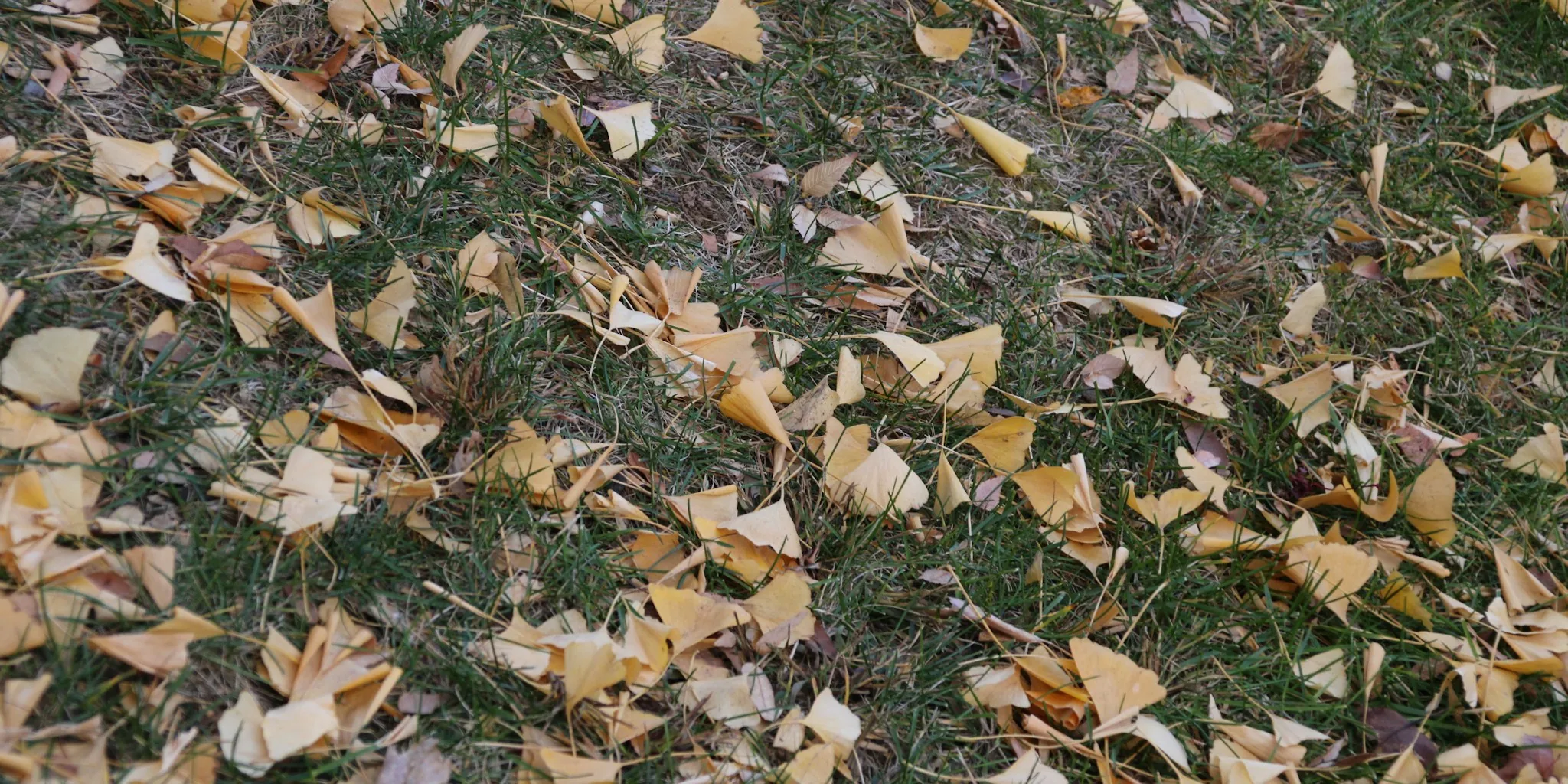

The Fall Leaf Myth That Changed Lawn Care Forever
For decades, homeowners have been told that fallen leaves on grass spell disaster. The conventional wisdom says rake them all up, bag them, and haul them away, or watch your lawn turn brown and patchy come spring. But recent research has turned this advice on its head, revealing that the old rule was based on incomplete information and actually costs you money and time.
The myth persists because it has a kernel of truth: thick, wet mats of leaves sitting on dormant grass can block sunlight and trap moisture, creating conditions for fungal diseases like snow mold. This legitimate concern became the foundation for an overly broad rule that applies to virtually every homeowner’s situation. However, decades of university research, including extensive field trials from Michigan State University, shows that the real issue isn’t whether leaves exist on your lawn at all, but how they’re processed.
What Science Actually Discovered About Leaves and Lawns
When Michigan banned yard waste from landfills in the 1990s, university researchers set out to answer a simple question: how much leaf debris can an established lawn actually tolerate? Their findings stunned even experienced agronomists. Scientists discovered that up to six inches of oak and maple leaves could be mulched directly into Kentucky bluegrass without harming turf health or density. This exceeds what most suburban lawns experience during any single season.
The key insight researchers uncovered is that particle size matters far more than the presence of leaves themselves. A whole, intact leaf behaves like a shingle, sealing out air and trapping water. A tiny fragment of that same leaf, however, drops between grass blades and begins breaking down naturally. Beneficial earthworms and soil microbes pull the rich organic matter underground during winter, converting it into valuable nutrients.
By spring, a properly mulched lawn returns approximately 3.4 pounds of pure nitrogen per 1,000 square feet to the soil, plus plant-available potassium. That’s a significant nutrient boost at zero cost to you. Soil testing by Michigan State University researchers in 1998 confirmed that decades of mulching oak leaves caused no shift in soil pH while actually increasing beneficial organic matter.
The Smarter Approach: Mulch-Mowing Instead of Raking
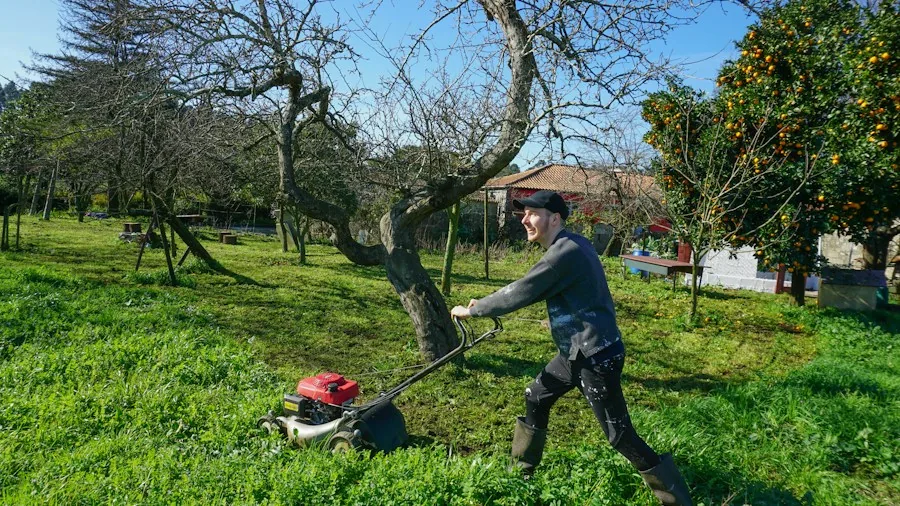
Rather than spending weekends hauling leaves away in bags, modern lawn care experts recommend a simpler technique called mulch-mowing. Simply run your regular lawn mower over the fallen leaves at a slow, steady pace. A couple of passes with a sharp mower blade chops dry leaves into manageable flakes that settle at soil level. When using quality garden tools and maintenance equipment, you’ll find the process becomes quick and effective.
Success with mulch-mowing depends on two critical factors: timing and mower setup. Crisp, dry leaves shred cleanly and effortlessly, while wet, waterlogged foliage will clump and clog your deck. Raise your mower to its highest setting and drive slowly, overlapping each pass. Light leaf drops typically need two passes, while tougher oak foliage may require three. After mowing, you should see green grass poking through with fine leaf bits settled comfortably at soil level.
Additional Benefits You May Not Have Considered
Beyond free nutrients, mulching leaves provides natural weed suppression. Fine leaf residue settling into the grass canopy covers exposed soil patches where annual weed seeds germinate. Field trials published by Michigan State researchers showed that regularly mulching maple and oak leaves led to measurably lower dandelion populations in Kentucky bluegrass. Over three consecutive seasons, homeowners who switch to mulch-mowing often see significantly reduced dandelion and crabgrass pressure.
This natural fertility boost also means you stop paying to haul away organic material, only to buy commercial fertilizers to replace it later. That’s a double savings on your seasonal garden expenses. If you’re concerned about soil health, proper garden tools and protective equipment make testing easy. Basic soil pH test kits are inexpensive and reliable, allowing you to verify conditions before making changes.
When You Should Still Rake
Common sense still applies to a few situations. Heavy leaf drifts piling up against fence lines, dense shade corners, or foundation walls are too thick for any mower deck to handle cleanly. Newly seeded lawns represent another exception, as fragile young grass seedlings need maximum sunlight and cannot push through heavy leaf residue.
In these cases, use a lightweight poly rake to clear the problematic areas. Any excess leaves you do rake off don’t need to go to waste either. They make excellent winter mulch for vegetable beds and flower borders, locking in moisture and breaking down into rich humus by spring.
Getting Ahead of the Season
The best time to start mulch-mowing is early fall, even when leaf drop is light. Build a habit of weekly mowing with the deck set high throughout autumn, whether heavy foliage has fallen yet or not. Taking 20 minutes to sharpen your mower blades before autumn hits makes a critical difference: a dull blade tears leaves into large, unsightly pieces that sit on grass, while a sharp blade pulverizes them into fine fragments.
By replacing the heavy rake with a weekly mower pass, you can stop fighting fall leaves and start using them to build a healthier, thicker lawn for spring. The result is a thriving yard with less work and genuine nutrient gains, all while keeping more money in your pocket.




Write Your Review
No reviews yet. Be the first to share your experience!