
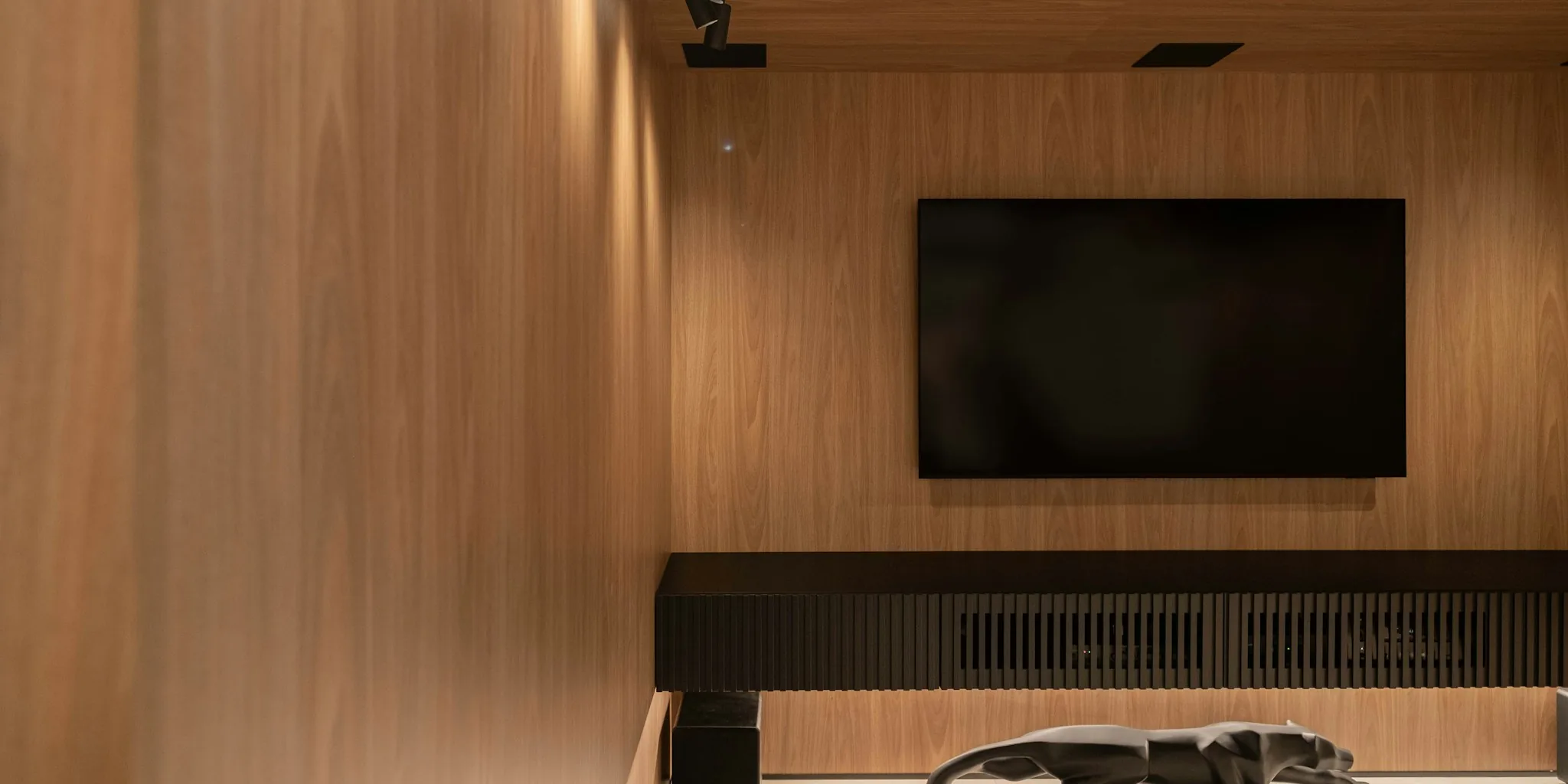

Setting up a home theater system is thrilling, but getting your speaker placement right is more important than most shoppers realize. Physics dictates where your speakers should go, and one of the biggest mistakes people make is mounting their speakers too high on walls or shelves. Understanding the science behind speaker placement will help you avoid costly installation mistakes and get the best performance from your investment.
Why Speaker Height Matters More Than You Think
The ideal placement for your main front speakers, center channel, and left and right speakers is at or slightly below ear level when you’re seated on your couch. This positioning ensures that high-frequency sounds, which carry dialogue clarity and fine musical details, travel directly to your ears. When speakers are mounted well above your head, those critical details become muffled or seem to lose their sharpness.
Think of it this way: high-frequency sound waves are highly directional, meaning they travel in a narrow beam. If that beam passes over your head, you miss the nuance that makes dialogue crisp and music engaging. A bookshelf speaker mounted at ceiling height will certainly produce volume, but the richness and clarity suffer significantly compared to the same speaker placed at seated ear level.
The good news is that fixing this problem doesn’t always require major renovations. Sometimes it’s as simple as moving a speaker down a few feet or angling it slightly toward the listening area.
Different Speaker Types, Different Rules
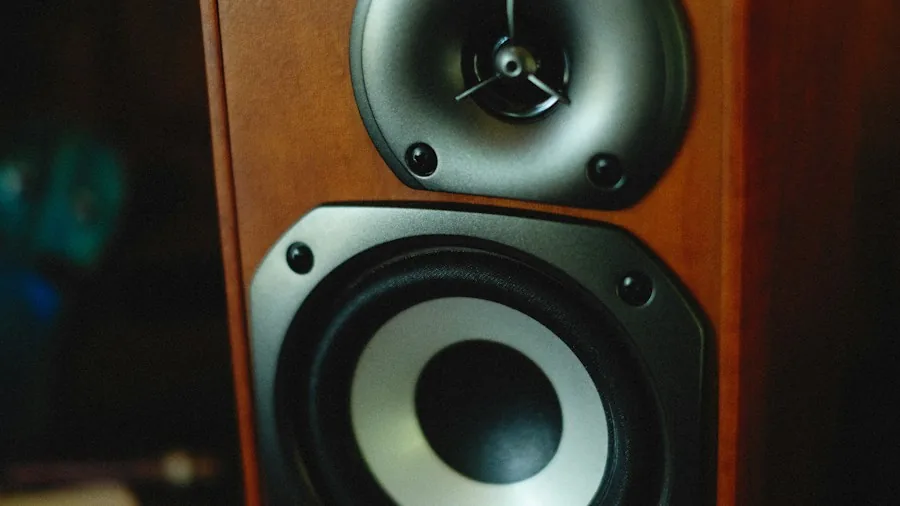
Not every speaker in your system follows the same height guidelines. Understanding these distinctions helps you optimize your entire setup.
- Front, center, and main speakers: These should be positioned at or just below seated ear level. They handle most of the dialogue, music, and on-screen action, making precise placement essential.
- Surround speakers: These offer more flexibility and can be placed 2 to 3 feet above ear level without losing performance. However, placing them too high blurs the distinction between side-positioned sounds and overhead sounds, which diminishes the immersive effect.
- Subwoofers: Low-frequency sound is omnidirectional, meaning listeners can’t pinpoint where it’s coming from. Subwoofers placed on the floor are standard and effective. Position still matters for bass response, but vertical height is far less critical than it is for front-facing speakers.
The Science of Seating Position and Speaker Distance

Beyond height, two mathematical guidelines help you position your listening seat and speakers for optimal sound. The 38 percent rule applies to your seating arrangement in a rectangular room. Measure the distance from the front wall to the back wall, then place your primary listening position about 38 percent of that distance from the front wall. For example, in a 20-foot-deep room, your main seat should be roughly 7.6 feet from the front. This placement avoids the center of the room, where bass buildup and nulls are most pronounced.
Once your seating is locked in, the 83 percent rule guides your front speaker spacing. The distance between your left and right front speakers should be about 83 percent of the distance from your listening seat to the midpoint between those speakers. If you’re 10 feet from the midpoint, space your speakers approximately 8.3 feet apart. These guidelines serve as excellent starting points, though every room is unique and may benefit from fine-tuning.
Adjusting for Your Specific Room
Most homes aren’t perfectly rectangular, and furniture layouts vary widely. Use these distance and height rules as a foundation, then make incremental adjustments until the sound satisfies your ears. If you’re installing a center channel speaker below your television, angle it slightly upward toward the listening area rather than leaving it flat. This simple tilt compensates for lower placement and maintains dialogue clarity.
When shopping for new speakers for your audio system, consider your room’s dimensions and typical seating arrangement before you buy. This planning ensures that whatever you purchase can be positioned correctly in your space. Many people invest in quality speakers then undermine their performance through poor placement, so getting the setup right matters as much as the equipment itself.
If you’re expanding an existing system or considering wireless speaker options, remember that placement principles apply across all speaker types. The effort you invest in proper speaker height and positioning directly translates to clearer dialogue, sharper sound effects, and a more immersive listening experience. Take the time to measure your room, calculate the optimal seating position, and position your speakers thoughtfully. Your ears will thank you every time you watch a movie or listen to music.






Write Your Review
No reviews yet. Be the first to share your experience!