
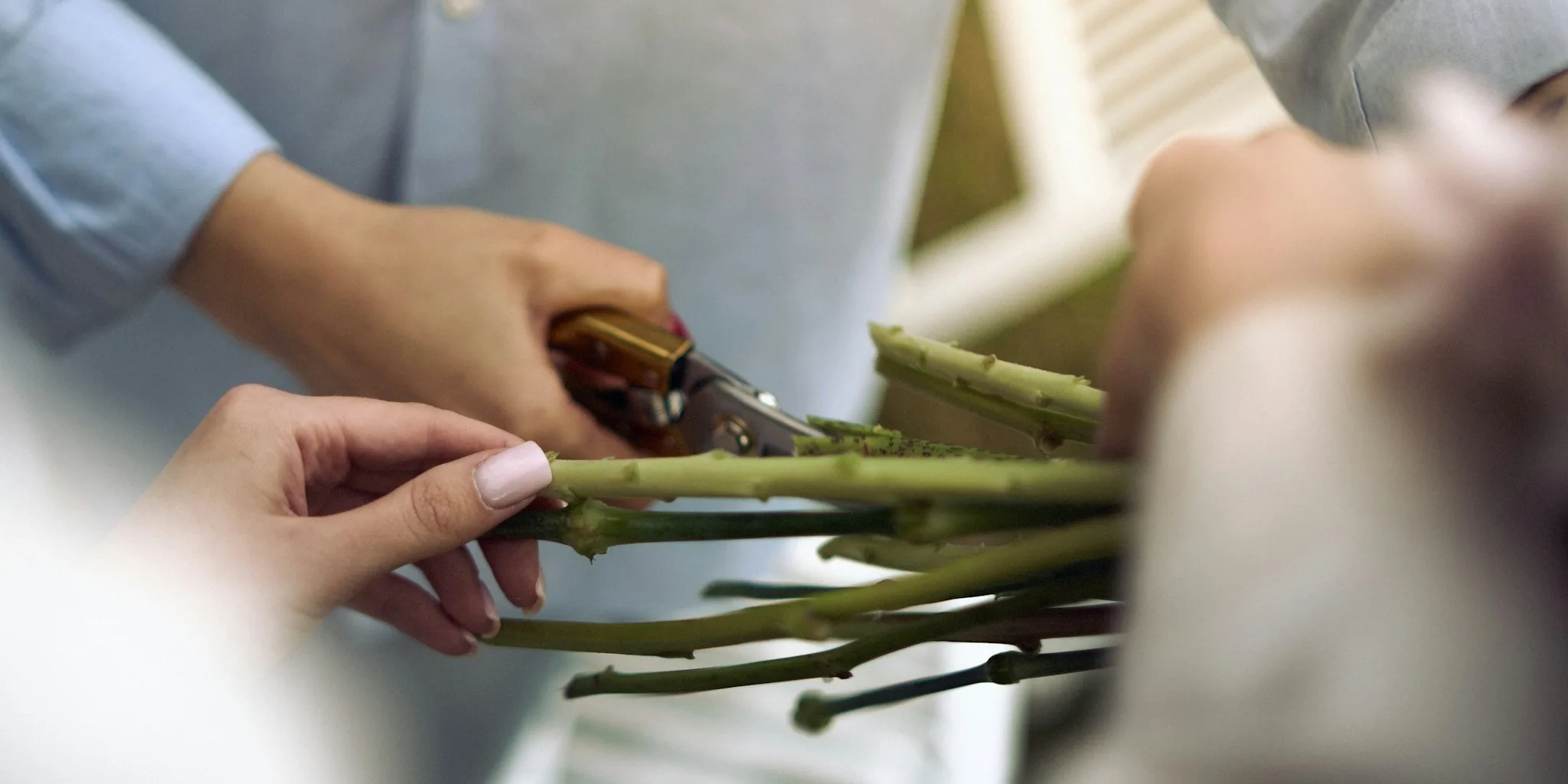

If your rose plants are struggling through hot summer weather, stress is likely triggering unwanted growth that could sabotage next year’s flower display. August is peak season for rose suckers to emerge, and understanding how to identify and remove them is one of the fastest ways to protect your investment in your garden.
What Are Rose Suckers and Why They Matter
Most modern roses sold to consumers are grafted plants, meaning the beautiful flowering variety you purchased has been fused onto a different, more vigorous root system. This grafting technique gives you the best of both worlds: stunning blooms paired with a hardy root system that survives winter and resists disease. However, when your rose plant experiences stress from heat, drought, or physical damage, the rootstock below the graft can produce aggressive shoots called suckers.
These suckers steal water and nutrients from your ornamental rose, forcing it to direct energy away from flower production. Left unchecked, suckers can completely overtake the plant. The flowers they produce, if any, will be small, pale, and single-petaled because they come from the plain rootstock variety, not the decorative rose you wanted to grow. In severe cases, suckers weaken the main stems so much that they die entirely, leaving you with a vigorous but unattractive rose bush.
Finding the Graft Union and Identifying Suckers
The key to managing rose suckers starts with locating the graft union, a thick, swollen knob on the main stem low to the ground. You may need to gently scrape away soil to find it, as it often sits just below the soil surface. Everything above this bulge is your desired rose variety. Everything below it belongs to the rootstock.
Suckers grow from below that graft union or emerge as separate shoots directly from the soil. You can distinguish them from healthy basal stems, which are new growth you want to keep, by examining their appearance. Suckers typically display duller, lighter-colored leaves, fewer thorns, and a greenish stem that shoots straight up. Basal stems, by contrast, usually have more thorns, reddish-tinged growth, and foliage that matches your main plant.
The surest way to confirm you have a sucker is to trace it back to its point of origin. If it emerges from below the graft union, it must go. Keeping your roses in quality containers and soil helps maintain plant health and reduces stress-related sucker growth.
Removing Suckers the Right Way
The good news is that sucker removal takes only about ten minutes and requires no special gardening expertise. You will want to invest in a pair of thornproof gloves and a narrow, pointed trowel or transplanting tool to minimize soil disturbance. Dig down carefully to expose the sucker where it connects to the rootstock, then grip it near its base and give a sharp, firm pull. Ripping rather than cutting is essential because cutting often encourages regrowth, while tearing removes the entire connection point.
For standard or tree roses, which have the graft union at the top of a tall trunk, you must also remove any side shoots growing from the main stem using sharp hand pruners. Understanding which plants pose risks to your property extends to managing aggressive rose growth that can shade out other garden areas.
What This Means for Your Rose Garden
August is the ideal month for this task because young suckers are easiest to remove and cost your plant the least energy. Monthly inspections throughout spring and summer help catch suckers when they are small. Heat stress, frost damage, or even an accidental mower knock can trigger sucker formation, so vigilance matters.
Taking ten minutes to pull suckers this weekend directly translates to larger, more abundant blooms next season. Pairing roses with complementary fall plants creates a cohesive garden display when your roses are performing at their best. Without intervention, suckers drain energy that should feed flowering stems, resulting in fewer and inferior blossoms. In the worst cases, you end up with a plain, vigorous rose bush that bears no resemblance to the beautiful variety you planted.
The payoff for this simple maintenance task is substantial: vigorous growth of your desired rose variety, prolific flowering throughout the next season, and a healthier plant overall. Make rose sucker removal part of your August gardening checklist, and you will notice the difference when summer blooms arrive next year.






Write Your Review
No reviews yet. Be the first to share your experience!