


General Motors and Ford are both doubling down on electric vehicles, but they are taking markedly different routes to get there. Both automakers outlined aggressive technology roadmaps in recent months, revealing strategies that will shape the EVs available to American shoppers over the next several years. Understanding their diverging approaches helps buyers see what to expect as the EV market expands.
GM’s New Generation Architecture and Battery Innovation
GM reaffirmed its long-term commitment to electric vehicles, stating that the company will be ready whenever the U.S. market demands EVs in large volumes. The automaker unveiled its Gen 4 EV architecture, a new platform designed to underpin a wide variety of upcoming models across multiple vehicle segments. Notably, GM is focusing on bringing EVs to mainstream segments, particularly small and medium crossover SUVs, which form the backbone of today’s American vehicle market.
A key differentiator for GM is its development of proprietary lithium manganese rich (LMR) battery cells. The company invested $900 million in two advanced facilities at its Warren Tech Center to develop and test these cells. GM claims its new LMR chemistry delivers energy density comparable to premium cells while approaching the cost savings of cheaper alternatives. Mass production of these cells will begin in 2028 at the Ultium Cells plant in Spring Hill, Tennessee.
GM’s Gen 4 platform brings substantial engineering improvements. Vehicles built on this architecture will be roughly 15 percent lighter than comparable models today, feature drag coefficients 25 percent lower, and incorporate drive units with 40 percent fewer moving parts. These units will be 20 percent more efficient than current motors, ultimately requiring roughly 20 percent less battery capacity while maintaining competitive driving range.
Ford’s UEV Platform and Assembly Revolution

Ford is pursuing a parallel but distinctly different strategy with its Universal EV (UEV) platform. The company’s first model under this new architecture will be the 2028 Fathom, a mid-size pickup truck that fits squarely within Ford’s strongest market segment. Ford plans to spawn up to five additional vehicles from the UEV platform over time, teasing some designs during recent media events.
Ford’s battery approach diverges sharply from GM’s. Rather than developing proprietary cell chemistry, Ford licensed lithium-iron-phosphate (LFP) cell technology from CATL, China’s largest cell manufacturer. The automaker will produce these cells at a new plant in Marshall, Michigan, prioritizing cost efficiency over developing new battery chemistry in-house.
Perhaps Ford’s most innovative approach lies in manufacturing. The company gutted and rebuilt its Louisville, Kentucky plant to accommodate a revolutionary three-stream assembly process. Instead of a traditional single continuous production line, Ford creates the battery and powertrain platform, front end, and rear section simultaneously in parallel streams, then mates them at the end. This streamlined approach reduces the number of steps, lowers costs, and accelerates production timelines.
Shared Technologies, Distinct Strategies
Despite their different paths, GM and Ford are both embracing technologies pioneered by EV startups like Tesla and Rivian. Both companies are transitioning to software-defined vehicle (SDV) architecture, replacing dozens of distributed processors with a single central computing unit. This enables over-the-air updates to add features, improve performance, and handle recalls without dealer visits.
Both automakers are also incorporating bidirectional vehicle-to-home and vehicle-to-grid technology, allowing EVs to power home appliances or serve as backup energy storage. This capability has proven surprisingly popular with EV shoppers, since traditional gasoline vehicles cannot offer it.
Pickup Trucks Show Different Strengths
The companies’ pickup truck strategies highlight their distinct market positions. Ford launched its new mid-size EV pickup because the segment represents genuine consumer demand and aligns with the brand’s heritage. GM’s current EV pickup offerings sit at the premium end of the market, featuring full-size trucks weighing over four tons with battery packs rated for 300 miles or more of range. As GM continues investing in battery technology, the company could eventually offer more compact truck options, though executives suggested creating a single platform for everything from small SUVs to full-size trucks would be extraordinarily difficult.
Manufacturing and Assembly Differences
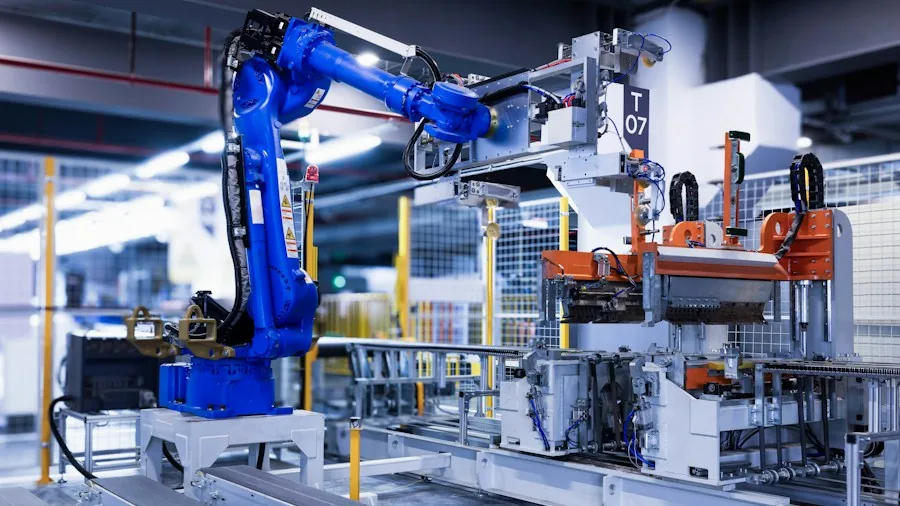
GM’s approach to manufacturing emphasizes the role of software-defined architecture in reshaping assembly sequences. The centralized computing engine and electrical components must be integrated early in production to enable proper systems testing throughout the build process. However, GM does not appear to be completely reimagining mass production as Ford is.
Ford’s three-stream assembly method represents a more radical rethinking of how vehicles are built. As luxury automakers enter the EV space, they too are exploring innovative manufacturing techniques. By creating major vehicle sections in parallel rather than sequentially, Ford aims to cut assembly time, reduce complexity, and lower production costs substantially.
What This Means for Shoppers
For American EV buyers, these diverging strategies spell increased choice and innovation. As the EV market evolves, GM’s focus on mainstream crossovers and Ford’s emphasis on affordable pickups should expand options across popular vehicle categories. GM’s battery innovation could lead to better range or lower prices, while Ford’s manufacturing revolution may result in faster delivery times and more competitive pricing.
Both companies are positioning themselves for an era when EVs dominate the market. Their different approaches mean consumers will benefit from competition, technological diversity, and vehicles tailored to various needs and budgets.






Write Your Review
No reviews yet. Be the first to share your experience!