


Skip the Guessing Game: Test Your Marathon Pace Before Race Day
If you’re training for a marathon with a specific finish time in mind, you face a critical challenge: pacing yourself correctly over 26.2 miles. Too fast at the start, and you’ll hit a wall. Too conservative, and you won’t reach your goal. The solution is simpler than most runners think: test your goal pace during training to confirm you can actually sustain it.
Many distance runners rely on the Yasso 800 method, a speed workout involving repeated 800-meter intervals. The theory suggests that your time for an 800-meter repeat, expressed in hours and minutes, equals your projected marathon finish time. While this workout provides useful data, running coaches recommend a different approach that gives you real-world confirmation of your readiness.
The Marathon Pace Long Run: Your Best Predictor
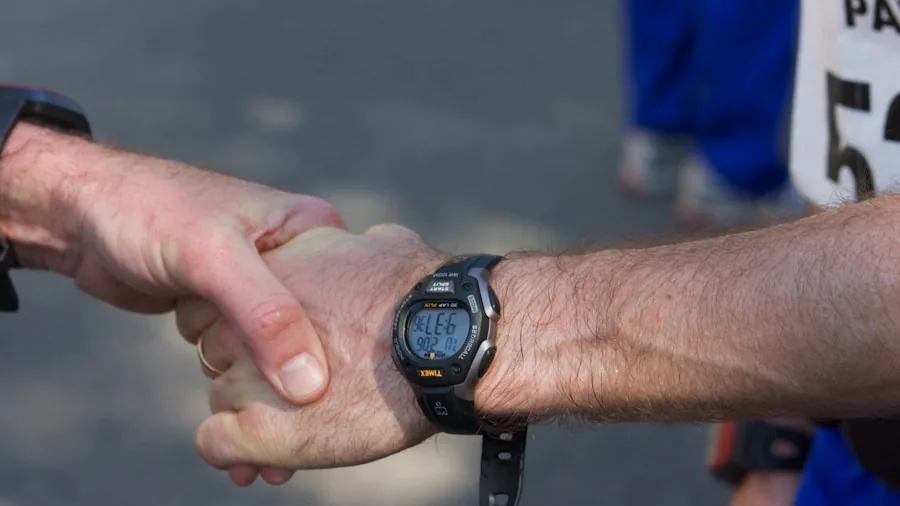
According to certified endurance coaches, the most reliable way to know if you can handle your goal marathon pace is to actually run that pace during a training session. This workout should happen roughly three weeks before race day, after your peak training week, while your legs are still tired and untapered. If you can maintain your goal effort when fatigued, you’ll feel confident that you can do it on fresh, race-day legs.
The key metric here isn’t hitting exact splits on each mile. Instead, focus on perceived effort. Aim for a 5 or 6 on a scale of 1 to 10, where 10 is maximum intensity. At this level, you should be able to speak a sentence or two but not maintain a full conversation. This effort zone mimics what you’ll experience during the actual race, accounting for variables like terrain, weather, and late-race fatigue that can’t be replicated in a lab or speed workout.
By the end of this workout, you should feel like you could keep going for a few more hours. That feeling is your green light that your goal pace is realistic and achievable.
How to Execute This Workout
The structure is straightforward and flexible enough for any fitness level. Start with a 20 to 30-minute warm-up at an easy, comfortable pace. Your body needs time to prepare for the effort ahead. Next comes the core work: 90 to 100 minutes of running at marathon goal effort. This duration is long enough to test your pacing control and fueling strategy but not so long that you can’t recover in time for race day. Finish with a 20 to 30-minute cool-down at an easy pace to flush out metabolic waste and begin the recovery process.
The beauty of this time-based approach is that it works whether you’re targeting a 3-hour marathon or a 5-hour finish. Your actual pace matters less than your ability to sustain the effort. Terrain variations, weather shifts, and individual fitness levels all affect speed, so coaches emphasize effort over pace.
Use This Workout Twice in Your Training Cycle
Consider running a shorter version of this workout early in your marathon build, about two to four weeks in. Run 60 to 70 minutes at marathon effort as part of your weekend long run. This gives you a baseline of your current fitness and helps establish a realistic training pace range from the start. Then, as your fitness improves over the following weeks, you dial in your goal pace more precisely.
Running this workout twice, once at the beginning and once near the end of your build, creates a before-and-after comparison that shows tangible progress. You’ll see firsthand how much stronger you’ve become, which builds mental confidence heading into race day.
Why Effort Matters More Than Pace

Many runners fall into the trap of obsessing over specific mile splits. They want to see perfectly even pacing and calculate their exact finish time. The reality is messier. On race day, wind, hills, crowd energy, and your physical state all influence your speed minute by minute. By training with perceived effort instead, you’re teaching your body to recognize the sustainable intensity you need, regardless of external conditions.
This approach also pairs well with proper gear choices. Investing in quality workout shoes designed for distance running and comfortable clothing that won’t chafe during long efforts removes distractions so you can focus on the work itself. Additionally, research on how your mindset and training environment affect performance shows that confidence from knowing your capability is a powerful tool.
Take Control of Your Race Day
Marathon training doesn’t require luck or guesswork. By running your goal pace under realistic fatigue conditions, you gather the data and confidence you need to set an honest target and execute it on race day. Three weeks before you cross the finish line, lace up, head out, and prove to yourself that you’re ready.






Write Your Review
No reviews yet. Be the first to share your experience!